






Whether you’re rearranging a living room, setting up a home office, or clearing space before guests arrive, two risks tend to follow you through every move: floor damage and physical strain. Dragging a heavy sofa or bookcase across hardwood or tile can leave behind lasting scratches, gouges, or cracked grout—and improper lifting puts serious stress on the lower back and joints.
Understanding the Risks of Moving Heavy Furniture
Fortunately, simple aids like moving blankets, dollies, and furniture sliders can dramatically cut down on friction and effort, helping you protect your floors and avoid unnecessary strain on your body. This guide walks through the practical steps to move furniture safely at home.
How Furniture Movement Damages Different Floor Types
Not all surfaces respond to weight and friction the same way. On hardwood, dragging creates surface scratches, wears through the finish, and can leave compression dents. Laminate is particularly vulnerable to chipping along edges and tearing of its wear layer. Tile and stone can crack outright—or lose grout integrity—when concentrated weight is applied through a small contact area like a narrow furniture leg. Vinyl and linoleum are prone to tears and pressure marks. The smaller the contact point, the greater the pressure per square inch, which is exactly why furniture feet pose more risk than a broad, flat base.
Health and Safety Concerns When Lifting and Pushing
Pulled muscles, back strain, and joint stress are among the most common DIY home hazards—and furniture moves are a frequent culprit. A few ergonomic fundamentals apply in every situation: keep the load close to your body, bend at the knees rather than the waist, and never twist while bearing weight.
Safety First: If an item feels too heavy or awkward to move alone, do not attempt it without help or proper equipment.
Preparing Your Space Before You Start
Before lifting anything, take a few minutes to plan the move carefully. Clear pathways to eliminate tripping hazards, measure both the furniture and any doorways it needs to pass through, and sketch out the new layout or mark target positions with tape on the floor.
Preparation checklist:
– Clear the floor path completely
– Measure furniture dimensions and all passage widths
– Remove contents from drawers and shelves to reduce weight
– Disassemble legs or feet where possible
– Remove loose rugs from the route
Emptying a bookcase before moving it, for instance, can cut its effective weight dramatically—and eliminates the risk of shelves shifting mid-move.
Essential Tools for Safe Furniture Moves
Floor-Friendly Tools That Reduce Friction and Strain
Two principles protect both floors and backs: spreading weight and reducing friction. A handful of practical tools support both goals:
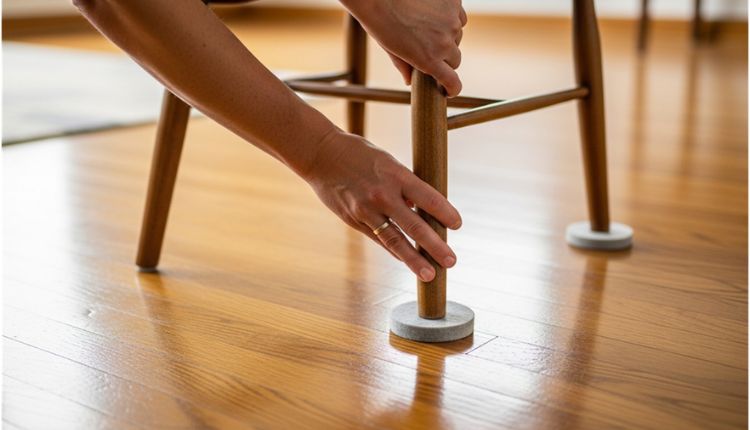
- Furniture sliders: Small pads or discs placed under legs or corners that allow heavy pieces to glide rather than drag. Felt-bottomed versions suit hard floors; smooth plastic ones work on carpet. They distribute weight across a broader area and can be reused for future projects.
- Moving blankets: Cushion hard edges and prevent surfaces from scraping against walls or floors during transit.
- Dollies and hand trucks: Transfer the load to rolling equipment, dramatically reducing physical effort over longer distances.
- Lift straps: Help two people share a load more evenly, reducing strain on both individuals.
Key Takeaway: Match the contact surface—felt, plastic, or rubber—to your flooring type to minimize friction and prevent damage.
Step-by-Step Method to Move Heavy Furniture Safely
Begin by tilting one side of the piece slightly to position sliders or padding under each leg or corner before you start pushing. Keep the item as level as possible throughout the move to protect its structural joints. Push from a low, stable stance, driving the effort through your legs rather than your lower back, and move slowly—sudden stops concentrate weight on a single point, which risks both floor damage and injury. Check periodically that protective pads have stayed properly in place.
When sliding isn’t appropriate—at thresholds, on uneven surfaces, or on stairs—lift instead, maintaining a neutral spine and relying on your legs for the work. For large or particularly heavy pieces on stairs, professional movers are the safer and more reliable choice.
Putting These Strategies into Practice
Protecting your floors and avoiding injury are equally important goals when rearranging furniture, and the good news is that addressing one tends to support the other. Thoughtful preparation, the right protective tools, and sound technique take care of both at once. Spending a few extra minutes to clear a path, set up appropriate aids, and move with proper form can prevent costly floor repairs and long-term physical strain down the road.
As a lasting habit, keep permanent soft pads under frequently moved pieces like armchairs or side cabinets, and store your moving aids together so they’re always within reach when you need them.
Key Takeaway: A small investment of time in planning and using simple aids can prevent costly floor damage and save your body from unnecessary strain.