






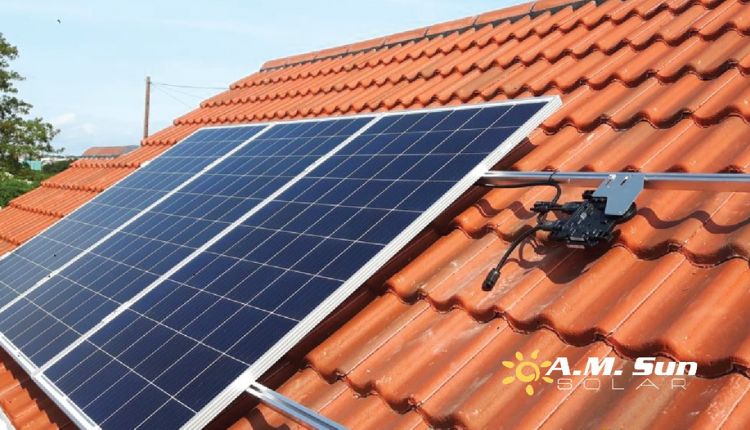
A rooftop with just two chimney shadows or a nearby tree can quietly reduce solar output by 10–30% over a year. That kind of loss is often not obvious on paper but shows up in monthly bills. This is where the debate around micro inverter vs string inverter becomes practical rather than theoretical.
On shaded or partially shaded roofs, inverter choice can influence whether a system performs consistently or underdelivers every afternoon. The difference is not just about efficiency ratings—it’s about how each panel behaves when conditions are uneven.
How Micro and String Inverters Actually Work
A micro inverter is a small device installed under each solar panel that converts DC electricity into AC right at the module level. In contrast, a string inverter connects a series of panels together so the entire string operates as one electrical unit, converting power at a single centralized point.
In real-world system design, these architectures behave very differently when sunlight is inconsistent.
According to the U.S. National Renewable Energy Laboratory (NREL), module-level power electronics—like micro inverters—can improve energy harvest in shaded conditions by reducing mismatch losses across panels.
For homeowners comparing system design approaches, modern platforms offering flexible architecture such as smart PV inverter options are increasingly bridging the gap between traditional string systems and module-level optimization.
Why Shade Changes the Equation Completely
On a perfectly unshaded roof, string inverters are often cost-efficient and highly effective. But shading introduces a problem called “panel mismatch.”
In a string system, the lowest-performing panel can drag down the output of the entire chain. Even a small shadow on one module can reduce the current flow across all connected panels.
Micro inverters handle this differently. Since each panel operates independently, shading only affects the specific module that is blocked, not the whole system. This makes them particularly suitable for:
- Roofs with dormers or vents
- Urban homes with nearby buildings
- Seasonal tree shading
- Complex roof orientations
In studies referenced by IEEE research papers on distributed PV systems, module-level conversion can reduce mismatch losses significantly under partial shading scenarios, especially during morning and late-afternoon irradiance shifts.
That said, string systems are not obsolete. In fact, modern hybrid designs using advanced MPPT (Maximum Power Point Tracking) algorithms can recover part of the lost performance. Some systems also integrate panel-level optimizers, creating a middle ground between the two approaches.
Cost, Maintenance, and Long-Term Performance Trade-offs
Beyond shading, the decision also comes down to system economics and long-term reliability.
String inverters usually have fewer components, which can mean lower upfront cost and simpler maintenance. However, a single failure can affect the entire system until repaired.
Micro inverters distribute conversion across multiple devices. This improves redundancy—one failing unit only impacts one panel—but increases installation complexity and potentially long-term replacement considerations.
According to BloombergNEF’s distributed solar analysis, residential PV systems are increasingly shifting toward module-level electronics as homeowners prioritize performance stability over minimal upfront savings.
In practice, system designers often weigh:
- Initial installation cost vs energy yield over 20–25 years
- Roof complexity vs electrical simplicity
- Maintenance access vs component redundancy
For systems that integrate storage or EV charging, inverter architecture becomes even more important. Hybrid ecosystems like SigenStor combine solar conversion, battery storage, and energy management into a unified platform, reducing inefficiencies caused by multiple disconnected systems.
So Which One Actually Fits a Shaded Roof?
If shading is occasional and minimal, a modern string inverter with strong MPPT performance may still deliver solid results. But when shading is predictable or structurally unavoidable, micro inverters typically provide more consistent energy output over time.
There is no universal winner—only different system behaviors under different roof realities.
For homeowners planning new installations, the better approach is not starting with inverter type, but starting with roof behavior: how sunlight moves across it throughout the day and year.
A well-matched design can often outperform a “higher-spec” system that ignores shading conditions entirely.
For a deeper look at system configurations and inverter architectures, exploring flexible smart PV inverter options can help match system design to real rooftop conditions rather than assumptions.