





While most modern offices have moved on from the cubicle that was ubiquitous at the end of the 20th century, many companies are still failing to take full advantage of office interior design as a tool for transforming their operations. The effect may not be quite as profound or immediate as a new piece of technology, but it is nonetheless very real. A well-designed workplace can boost motivation, focus and efficiency.
Here are just a few office design ideas that are proven to help do that. These can be implemented by a professional office design firm during your next remodel, or you can try them out yourself by making a few small changes.
Balance Openness and Privacy
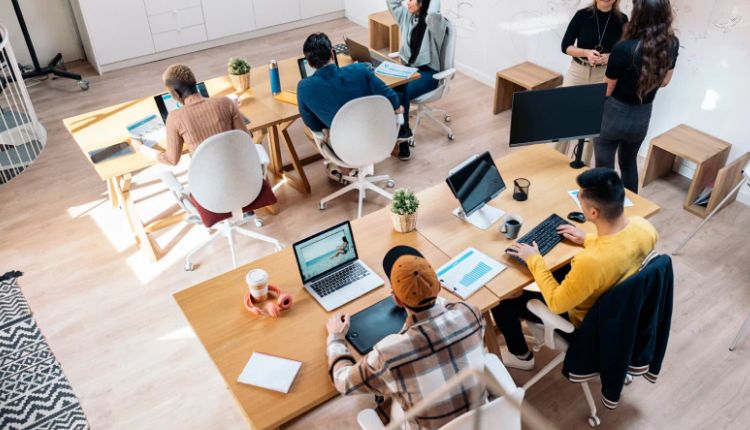
We know now that an entire office of grey cubicles is just depressing, but swinging the other way can be just as bad. Many companies in the last couple of decades switched to entirely open-plan offices, and while these have been good for collaborative work, they’ve also proven quite distracting for employees trying to complete solo tasks. Therefore, the best modern office interior design incorporates both.
Shared tables, lounges or booths are great for encouraging collaboration, while individual workspaces or dedicated quiet spaces allow for focused individual work when necessary. You can adjust the ratio depending on your company’s needs.
Take Ergonomics Seriously
Ergonomics comes up a lot when brainstorming office interior design ideas, but it is sometimes dismissed as an unnecessary expense. There is a misconception that all you’re paying for with ergonomic furniture is a more comfortable chair or desk, but that’s not true. Maintaining correct posture certainly does increase comfort, but it also keeps employees free from distracting aches and pains. It also lets blood circulate freely, keeping the mind oxygenated and focused.
Beyond these day-to-day benefits, it also leads to fewer absences and increased motivation in the long run. If specially made ergonomic furniture is outside of your office space interior design budget, then consider adding standing desks that employees can move to when they want a break from sitting.
Increase Natural Light
People often use the terms interior design office design and workspace design interchangeably, although not all workspaces and interiors are offices. Some design ideas that work for offices may not be possible to implement in factories or shops, but one change that almost every workplace can make is to increase natural light. It’s a proven mood booster and is a lot more stimulating than fluorescent overhead lights, plus it reduces eye strain.
Wherever possible, let natural light flow and supplement it with artificial light in areas it cannot reach. This latter point is important, because poor lighting can lead to eye strain, headaches and a lack of accuracy when performing visual tasks.