






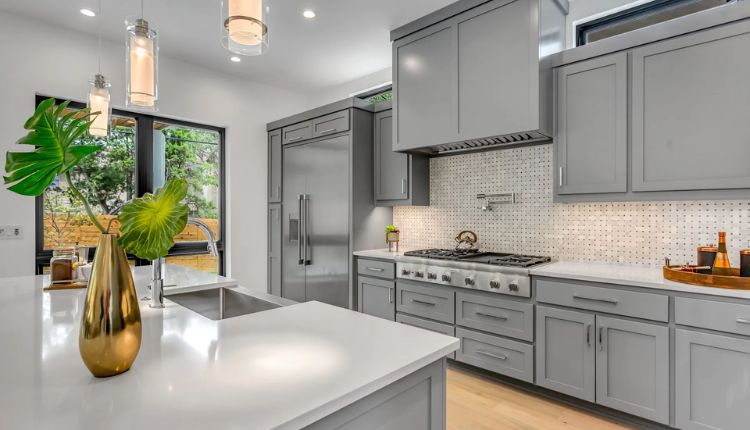
When homeowners begin planning a kitchen renovation, the conversation usually starts with countertops or appliances. Cabinets, despite occupying the majority of visible wall space and carrying the full load of daily kitchen use, often receive less careful consideration than they deserve. This is particularly true when the material in question sits outside the familiar range of painted wood or laminate finishes.
Stainless steel as a cabinet material carries a long track record in commercial kitchens — restaurants, hotel kitchens, catering facilities — where the demands on equipment are unrelenting and the tolerance for maintenance failure is essentially zero. That history is relevant to residential buyers, not because a home kitchen operates at the same intensity, but because the same properties that make stainless reliable in those environments translate directly into durability, hygiene, and long-term performance at home.
This guide is written for homeowners who are seriously evaluating stainless steel for their kitchen cabinets and want a grounded, practical understanding of what the material involves — from initial selection through installation, day-to-day use, and long-term care. The goal is to support an informed decision, not to persuade one direction or another.
Understanding What Stainless Steel Cabinets Actually Are
Stainless steel kitchen cabinets are not the same category of product as stainless steel appliances. Appliances use a thin cosmetic layer of steel over an underlying structure. Cabinets constructed from stainless steel are built from formed or welded steel sheet throughout — the frame, door panels, and drawer fronts are all metal. The structural logic is entirely different from wood cabinetry, which relies on joinery, screws driven into particleboard, and adhesive bonding between layers of material.
For homeowners researching this category, reviewing the construction standards and finish options associated with purpose-built stainless steel kitchen cabinets is a useful early step, as residential-grade products vary significantly in gauge, weld quality, and interior finish from one manufacturer to the next.
The material itself is a steel alloy that resists corrosion because of its chromium content. When chromium is exposed to oxygen, it forms a thin, self-repairing oxide layer on the surface. This passive layer is what prevents rust under normal conditions. It is not immune to damage — certain chemicals, prolonged exposure to salt, or surface abrasion can compromise it — but under routine domestic use, it performs with minimal intervention.
Grades of Stainless Steel and Why They Matter in a Kitchen
Not all stainless steel performs the same way, and the distinction matters in a kitchen environment specifically because of moisture, cleaning agents, and proximity to cooking. The two grades most commonly used in residential and commercial cabinetry are 304 and 316. Both offer solid corrosion resistance, but 316 includes molybdenum, which improves resistance to chlorides — the compounds found in salt and in many household cleaners.
For a standard inland home kitchen, 304-grade stainless is generally adequate and represents the majority of residential cabinet products on the market. Coastal properties, or kitchens where heavy salt use or aggressive cleaning products are routine, may benefit from the additional protection of 316. The practical consequence of selecting the wrong grade is not immediate failure — it is gradual surface degradation, pitting, and staining that becomes increasingly difficult to reverse over time.
Surface Finish Options and Their Functional Implications
Stainless steel cabinets are available in several surface finishes, and this choice affects both appearance and maintenance. A brushed or satin finish — achieved by grinding the surface in a consistent linear direction — is the most common for residential applications. It softens the appearance of fingerprints and minor scratches by visually blending them into the grain of the finish.
Mirror or polished finishes are more reflective and can make a kitchen feel more open, but they show contact marks and require more frequent cleaning to maintain their appearance. Matte or bead-blasted finishes offer a flatter, more industrial look and are somewhat more forgiving of surface contact, though they can trap fine particles in their texture if not cleaned regularly. The finish decision should be made in relation to how the kitchen is actually used, not only how it looks in a showroom.
Evaluating Whether Stainless Steel Is Right for Your Kitchen
The material has genuine strengths, but it also places certain demands on the space and the household. Making an accurate assessment before committing to the investment prevents the frustration of discovering incompatibilities after installation is complete.
Moisture, Heat, and Hygiene Considerations
Stainless steel does not absorb moisture. This is its primary structural advantage over wood-based cabinetry in a kitchen environment, where steam from cooking, splashes near the sink, and humidity fluctuations are constant factors. Wood cabinets, even well-sealed ones, expand and contract with changes in moisture, which causes joints to loosen and finishes to crack over years of use. Stainless steel remains dimensionally stable regardless of humidity.
From a hygiene standpoint, the non-porous surface of stainless steel does not harbor bacteria in the way that wood grain, particleboard edges, or laminate seams can. This characteristic is well-documented in food service contexts — the FDA’s guidelines on food contact surfaces acknowledge non-porous metal surfaces as appropriate for environments where hygiene control is a priority. For residential kitchens where food preparation frequency is high, this property carries real practical value.
Acoustic and Thermal Properties Worth Noting
Metal transmits sound differently than wood. Stainless steel cabinets in a kitchen can produce a resonant quality — particularly with hollow doors or thin-gauge panels — when items are placed inside or when doors are closed firmly. This is not universal, and better-constructed cabinets address this through damped hinges, interior insulation, or foam backing on panels, but it is a characteristic worth evaluating when reviewing specific products.
Stainless steel also conducts heat more readily than wood. Cabinets positioned near a range or oven may become warm during cooking. This is rarely a structural concern but can affect what is stored in those specific cabinets, particularly heat-sensitive items like certain foods, candles, or products in plastic containers.
The Installation Process and What It Requires
Installing stainless steel cabinets is a different process than installing wood cabinetry, and approaching it with the same assumptions leads to complications. The weight of steel cabinets is substantially greater than equivalent wood units. Wall anchoring requirements are more demanding, and the wall structure — whether stud framing or masonry — needs to be evaluated before installation begins.
Professional Installation vs. DIY
Many homeowners handle standard wood cabinet installations independently. With stainless steel, the weight and precision required to align metal units cleanly makes professional installation the more reliable choice for most households. Metal cabinets do not have the same tolerance for minor misalignment that wood can absorb — a gap or deviation that might be corrected with filler or trim in a wood installation is more visible and structurally apparent in metal.
Beyond weight and alignment, metal-to-wall connections require appropriate anchoring hardware. Lag screws into wall studs are standard, but the load-bearing math changes when the cabinet weight increases. An experienced installer familiar with metal cabinetry will assess the wall structure and use hardware rated for the actual load, rather than defaulting to the lighter-duty hardware common in residential wood cabinet work.
Plumbing and Electrical Coordination
Stainless steel is electrically conductive. In kitchens where cabinets are installed near electrical outlets, switches, or under-cabinet lighting, the installation needs to account for this. Proper grounding and separation between the cabinet structure and any live electrical components is not optional — it is a basic safety requirement. A licensed electrician should review the electrical layout before cabinet installation begins if there is any proximity between metal surfaces and wiring.
Similarly, plumbing lines under a sink cabinet or along a wall run should be confirmed watertight before enclosure. A slow leak inside a wood cabinet may go undetected for some time because the wood absorbs moisture gradually. The same leak inside a metal cabinet is immediately visible as pooling water, which is actually an advantage — it reveals the problem faster — but if the cabinet is sealed against the wall, the water needs a clear path to drain rather than accumulate.
Maintaining Stainless Steel Cabinets Over Time
The long-term performance of stainless steel kitchen cabinets is directly connected to how they are cleaned and what products are used on them. The material does not require the refinishing, repainting, or resealing that wood cabinets need over time, but it responds poorly to certain chemicals and cleaning methods that are common in most households.
Cleaning Methods That Protect the Surface
Routine cleaning with warm water and a mild dish soap, followed by drying with a soft cloth, is sufficient for regular maintenance. Wiping in the direction of the grain — consistent with the brushed finish direction — prevents micro-scratches from accumulating into a visible pattern over time. This is a small habit that makes a measurable difference over years of use.
Chlorine bleach, steel wool, and abrasive scrubbing pads should not be used on stainless steel surfaces. Bleach can break down the passive oxide layer that provides corrosion resistance. Steel wool leaves embedded iron particles that rust independently on the surface. Abrasive pads scratch the finish in directions inconsistent with the grain, creating a dull, uneven appearance that cannot be fully reversed without professional refinishing.
Addressing Fingerprints, Stains, and Minor Scratches
Fingerprint marks are the most common visual complaint with stainless steel surfaces. A small amount of mineral oil or a purpose-made stainless steel cleaner applied with a soft cloth removes fingerprints effectively and leaves a light protective coating that slows their reappearance. This is a five-minute task and, done weekly, keeps the surface looking consistent with minimal effort.
Water stains from hard water deposits respond well to diluted white vinegar, applied briefly and rinsed thoroughly. For light surface scratches on a brushed finish, specialty scratch-removal kits designed for stainless steel can blend the affected area back into the surrounding grain, though deeper gouges generally require professional attention to address without worsening the surrounding finish.
Cost Considerations and Long-Term Value
Stainless steel cabinets carry a higher initial cost than most standard wood or laminate options. This is a function of material cost, manufacturing complexity, and the relatively smaller market compared to conventional cabinetry. However, the total cost calculation over the life of the kitchen looks different from the upfront comparison.
Wood cabinets in high-use kitchens typically require refinishing or replacement within ten to fifteen years if they are subjected to significant moisture, heat, or mechanical wear. The joinery weakens, the finish deteriorates, and the structural integrity of particleboard components becomes unreliable. Stainless steel, properly maintained, does not degrade in the same way. The surface does not peel, the structure does not swell, and there is no refinishing cycle to plan or budget for.
For homeowners who plan to remain in a property long-term, or who are renovating a kitchen they intend to use heavily, the durability argument for stainless steel is straightforward. For those who may sell within a few years, the consideration is more about buyer perception and resale value in the local market, which varies considerably depending on the property type and buyer expectations.
Closing Considerations
Choosing stainless steel for kitchen cabinetry is a decision that rewards careful evaluation. The material performs reliably when it is selected, installed, and maintained correctly. It is not universally the right choice — households that prioritize warmth in design, have limited budgets, or plan short-term ownership may find better value in other materials. But for kitchens where hygiene, durability, and resistance to the cumulative effects of heavy use are primary concerns, stainless steel represents one of the more dependable options available.
The most productive approach is to understand the material on its own terms rather than comparing it superficially to wood. Stainless steel does not behave like wood, does not require the same care, and does not age in the same way. Once that distinction is clear, the practical decisions around grade, finish, installation, and maintenance fall into place without significant complexity.
Homeowners who take the time to evaluate their specific kitchen conditions — the humidity levels, the cooking frequency, the proximity to heat sources, and the cleaning habits already in place — will arrive at a decision they can stand behind for the life of the renovation.