






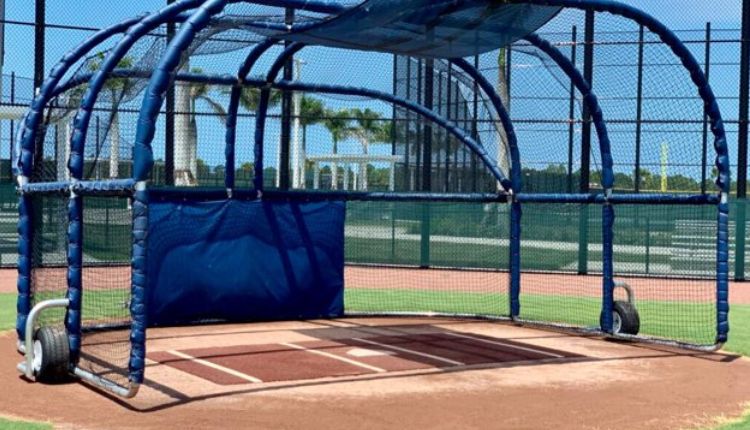
Athletic departments at high schools face a recurring tension between what they need for proper player development and what the facility, budget cycle, and administrative structure will realistically support. Batting cages sit squarely in the middle of that tension. They are not optional equipment for competitive programs, but the decision about which type to install — and how — carries consequences that extend well beyond the initial purchase. The wrong configuration creates scheduling bottlenecks, maintenance burdens, and safety liabilities that compound over time. The right one quietly supports the program year after year without requiring constant attention.
This is not a simple preference question. The distinction between portable and permanent batting cage systems involves different cost structures, installation requirements, space commitments, regulatory considerations, and long-term operational implications. For an athletic director or facilities coordinator making this decision, understanding those differences clearly is the starting point for any responsible evaluation.
What the Decision Actually Involves for High School Programs
The conversation around high school batting cages is often reduced to cost comparisons, but the more accurate framing is operational fit. A system that works well at one school may create friction at another based purely on how that school uses its athletic spaces, how its grounds are maintained, and whether multiple sports share the same footprint. Before any purchase decision is made, the department needs to understand what it is actually committing to — not just the upfront expense, but the ongoing management, the installation dependencies, and the constraints the system places on future use of that space.
Portable systems and permanent installations are not just different products. They represent different operating models. Understanding high school batting cages as infrastructure — not just equipment — changes how these decisions get evaluated and justified to administrators, school boards, and facilities teams.
Space Ownership and Use Conflicts
High school athletic facilities are typically shared resources. A gymnasium may double as an event space, a practice infield may be used by multiple teams across different seasons, and available square footage is rarely dedicated to a single sport year-round. This reality directly affects whether a portable or permanent system is viable.
Permanent batting cages claim space. Once installed, that section of a gym, indoor facility, or outdoor area is committed to a fixed use. For programs with dedicated hitting facilities or underused outfield space, this is acceptable. For programs operating in multi-use environments, claiming permanent real estate for one sport’s practice infrastructure creates friction with other programs and with the administration that oversees scheduling.
Portable systems preserve optionality. They can be deployed during the baseball or softball season and stored when not in use, allowing the same floor space to serve different functions across the school year. This flexibility has real operational value, but it also introduces its own friction: setup and teardown take time, require trained staff or consistent student labor, and create risk if the process becomes inconsistent or if equipment is stored improperly.
Who Manages Setup and Ongoing Maintenance
Permanent installations require an upfront investment in professional installation and periodic structural inspection, but they do not require daily or seasonal labor to operate. The system is present when needed and does not depend on anyone remembering to set it up correctly. This consistency matters in programs with high staff turnover, limited athletic support staff, or where coaches are already stretched across multiple responsibilities.
Portable systems distribute the labor differently. They require physical handling, correct assembly, and proper storage. In schools where that labor is managed reliably, this works. In schools where it is not, the system gradually degrades — through improper folding, incorrect storage, exposure to moisture, or minor structural damage that accumulates over time and eventually compromises both the cage’s function and its safety.
Permanent Installations: Structural Commitment and Long-Term Value
A permanently installed batting cage is a capital improvement. It is anchored to a structure or to the ground, built to withstand sustained use, and treated by accounting departments as a fixed asset rather than an equipment line item. This classification affects how it is funded, how it is depreciated, and how it fits into a school district’s long-range facilities planning.
The case for a permanent system rests on consistent availability, structural integrity, and reduced operational overhead. When a team can walk into an indoor facility and begin practice immediately without any setup process, it removes friction that — while small in isolation — adds up significantly over a full season. Practice time is already limited in most high school programs. Eliminating the setup variable means more of that time goes toward actual player development.
Approval Processes and Capital Budgets
Permanent installations typically require facilities approval, building permits depending on local jurisdiction, and in some cases review by a school board. This extends the procurement timeline considerably compared to purchasing portable equipment. Athletic directors who have not anticipated this timeline may find themselves mid-season without the installation they planned for.
On the other hand, permanent installations are more likely to qualify for capital budget allocations, booster-funded capital campaigns, or facility grants that are not available for consumable or movable equipment. Understanding which funding pathways are available in a specific district can shift the financial calculus significantly. The National Center for Education Statistics maintains data on school facilities spending that can be useful when building a budget justification for permanent athletic infrastructure investments.
Durability and Weather Exposure for Outdoor Systems
Outdoor permanent batting cages face sustained exposure to ultraviolet radiation, wind load, moisture, and temperature variation. The materials used in outdoor permanent systems — framing, netting, and anchoring components — need to be appropriate for the local climate and the level of use the program demands. A system installed at a school in a coastal environment faces different durability pressures than one installed in an inland, low-humidity region.
Netting degradation is the most common maintenance issue in outdoor permanent systems. Netting that is not rated for outdoor exposure begins to weaken and become brittle, which creates both a functional problem and a safety risk. Departments that plan to install permanent outdoor systems should establish a netting inspection and replacement schedule as part of their standard facilities maintenance calendar rather than waiting for visible failure before addressing it.
Portable Systems: Operational Trade-offs and When They Make Sense
Portable batting cage systems are appealing because they lower the barrier to entry. They do not require installation contractors, they can be purchased from an equipment budget rather than a capital budget, and they can be moved or removed if the program’s needs change. For smaller programs, programs in early development, or programs operating in facilities that genuinely cannot accommodate a permanent structure, portable systems are a practical and reasonable choice.
The trade-offs, however, are consistent with what any portable equipment introduces. Portability requires management. The system needs to be properly handled during setup and storage, the components need to be inspected regularly for wear, and the program needs reliable personnel who know how to do this correctly. When those conditions are met, portable systems function well. When they are not, the system’s condition deteriorates faster than most departments anticipate.
Netting Quality and Frame Stability in Portable Systems
The netting used in portable batting cages varies considerably in construction quality, and that variation has direct safety implications. Netting that cannot absorb repeated ball impact without deforming or degrading creates a risk that accumulates slowly and often goes unnoticed until an incident occurs. For a high school athletic department, the safety liability attached to substandard netting is not a minor concern.
Frame stability is the other critical factor. Portable frames that rely on friction-fit connections or lightweight tubing may be adequate for light recreational use but are not appropriate for daily high-volume practice at the competitive high school level. Frames should be evaluated on their ability to maintain structural integrity under sustained use and to stay stable without requiring supplemental anchoring or constant adjustment between uses.
Storage Requirements Often Underestimated
Departments that have purchased portable systems and later regretted the decision frequently cite storage as the overlooked problem. Portable batting cage systems, when broken down properly, still require significant storage space. They need to be stored flat or in ways that prevent the netting from developing permanent creases or stress points, and the frame components need to be kept in a dry environment to prevent corrosion.
Schools without dedicated equipment storage rooms — which includes a significant proportion of public high schools — often end up storing portable cage components in gym corners, under bleachers, or in outdoor storage areas. Each of those environments introduces risks to the equipment’s condition. The cumulative effect of improper storage shortens the usable life of a portable system substantially and erodes the cost advantage that made it attractive in the first place.
Making the Decision: A Framework for Athletic Directors
The right system for any given high school program is the one that fits the program’s actual operating conditions, not the one that fits an idealized version of what the program might look like in the future. There are four questions that should anchor this evaluation.
- Is there dedicated space available that can be committed to batting practice without creating scheduling conflicts for other sports or school programs?
- Does the program have the staffing and operational consistency to manage portable equipment responsibly over multiple seasons?
- What budget pathways are available, and do those pathways favor capital expenditure or equipment purchases?
- What is the expected frequency and intensity of use, and what durability demands does that create for the structure and netting?
Programs that can answer these questions concretely will find the decision becomes clearer. Programs that attempt to evaluate the decision in the abstract often end up purchasing based on price and later discovering that the system they chose creates more operational friction than it resolves.
It is also worth noting that this is not a one-time decision. Batting cage systems require periodic reassessment as programs grow, facilities change, and equipment ages. Departments that build a replacement and inspection cycle into their planning from the start avoid the reactive replacement decisions that tend to happen at the worst possible time — mid-season, over budget, and under pressure.
Closing Considerations
Athletic departments at the high school level operate with tight resources, limited administrative bandwidth, and real accountability for how funds are spent. Batting cage decisions may not carry the same visibility as a gymnasium renovation or a new scoreboard, but they affect daily program operations in ways that accumulate meaningfully over time.
The portable versus permanent question does not have a universal answer. What it has is a structured way of thinking through the real variables — space, staffing, budget classification, use frequency, and maintenance capacity — that determine which type of system will actually serve the program well. Making that evaluation carefully, with input from both the coaching staff and the facilities team, leads to decisions that hold up over time and avoid the common pitfalls that come from prioritizing initial cost over operational fit.
A batting cage that functions reliably, holds up under regular use, and stays safely maintained is a contribution to the program that pays forward every season. Getting that decision right from the start is worth the time it takes to do the evaluation properly.