






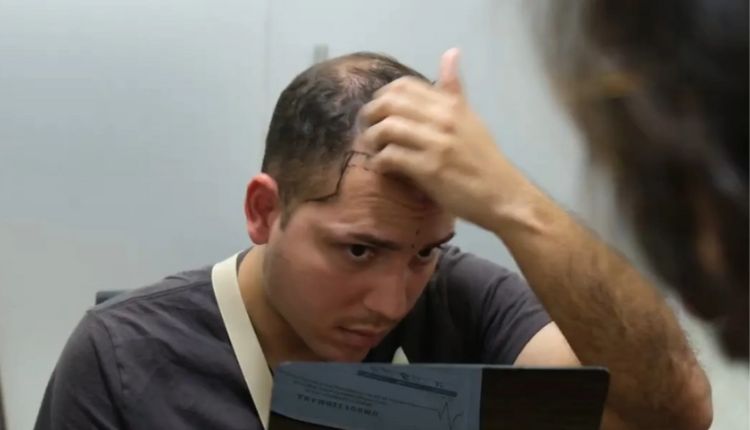
Hair loss affects millions each year, and for many, it shows up gradually – thinner density, widening part lines, or receding temple points. These changes can feel frustrating, but modern hair restoration has become more advanced, refined, and patient-friendly than ever.
As techniques have evolved, so has patient demand for refined, comfortable, and medically advanced solutions, including what many refer to today as a luxury hair transplant in Turkey.
Among the available techniques, FUE (Follicular Unit Extraction) is now considered one of the most precise and minimally invasive solutions in contemporary hair restoration.
This guide explains how FUE works, when it’s recommended, what recovery looks like, and how leading clinics in Turkey like UniquEra Clinic – use refined medical protocols to improve follicular survival and long-term outcomes.
What Is a FUE Hair Transplant?
Manual hair transplant FUE, or Follicular Unit Extraction, is a minimally invasive technique that involves extracting individual follicular units-each containing one to four hairs-from a donor area and implanting them into thinning or bald zones.
Unlike traditional strip harvesting (FUT), which removes a strip of scalp, FUE leaves only microscopic dot-like marks that heal quickly and blend seamlessly with surrounding hair.
Key advantages include:
-
No linear scarring.
-
Faster recovery (typically 5–7 days).
-
Natural hairline design through precision placement.
-
Suitability for scalp, beard, and eyebrow restoration.
Modern FUE often integrates Sapphire FUE or DHI (Direct Hair Implantation) methods, offering even finer incisions and higher graft survival rates.
How the Procedure Works?
A successful FUE Hair Transplant in Turkey follows a structured medical sequence designed to protect each follicle’s vitality:
-
Trichoscopy-Based Assessment:
The process begins with detailed scalp imaging to evaluate follicular density, donor capacity, and vascular health. -
Anesthesia & Donor Preparation:
The donor area-usually the back of the head-is trimmed and anesthetized to ensure comfort. -
Follicular Extraction:
Using 0.8–1.0 mm punches, follicles are extracted individually. Surgeons or medical experts maintain alignment with each follicle’s natural curvature to prevent transection. -
Graft Preservation:
Extracted grafts are stored in chilled ATP-enriched isotonic solutions, preserving their metabolic energy until implantation. -
Implantation:
Using sapphire-tipped implanters or Choi pens, grafts are implanted at calculated angles (30–45°) to mimic natural growth. -
Aftercare & Recovery:
Platelet-Rich Plasma (PRP) or Low-Level Laser Therapy (LLLT) is applied to stimulate angiogenesis and accelerate healing.
Within three months, new follicles begin to anchor and grow naturally, while full density typically appears within 10–12 months.
Why is the FUE Hair Transplant procedure preferred today?
Patients and clinicians increasingly choose FUE because it offers:
-
No stitches or long scars
-
Shorter downtime – most return to normal activities in 3–5 days
-
Natural growth patterns due to precise angulation
-
Versatility for scalp, beard, and eyebrow restoration
-
High compatibility for both men and women
FUE also allows for refined hairline design, creating soft, gradual transitions that mimic natural emergence.
FUE vs DHI vs FUT: Technique Comparison
While modern clinics prioritize FUE and DHI for precision and faster recovery, some centers still perform manual hair transplantation, where follicles are extracted without motorized tools. This method offers tactile control but is slower and depends heavily on the operator’s skill.
|
Feature |
Sapphire FUE |
DHI (Direct Hair Implantation) |
FUT (Strip Method) |
|
How follicles are taken |
Individually with micro-punch (0.8–1 mm) |
Individually with micro-punch |
A strip of scalp is surgically removed |
|
Scarring |
Tiny dot scars |
Tiny dot scars |
Linear scar at donor area |
|
Implantation method |
Channels created first, then grafts inserted |
Grafts implanted directly using Choi Pen |
Channels created manually, grafts placed |
|
Recovery time |
3–7 days |
3–7 days |
10–14 days |
|
Pain level |
Minimal, under local anesthesia |
Minimal, under local anesthesia |
Slightly higher due to sutures |
|
Suitable for |
Most patients, including beard & eyebrow |
High-density areas. Hairline refinement |
Patients needing maximum grafts |
|
Hairline naturalness |
Very natural with proper angle control |
Highly precise due to pen placement |
Good, but less refined than FUE/DHI |
|
Ideal donor requirement |
Medium–high density |
Medium–high density |
High density required |
|
Procedure duration |
6–8 hours |
6–9 hours |
4–6 hours |
|
Recovery comfort |
Very comfortable. No stitches |
Very comfortable. No stitches |
Stitches removed after 10–14 days |
|
When it’s recommended |
Standard modern technique for most cases |
Precision work, smaller areas, dense packing |
When donor strip is the only option |
Eligibility: Who Can Benefit from FUE?
You may be an ideal candidate for FUE if:
-
You have stable donor areas with healthy hair density.
-
You experience pattern baldness, thinning, or traction alopecia.
-
You seek a beard, eyebrow, or scar correction.
-
You prefer a minimally invasive option with fast recovery.
Those with diffuse thinning or inadequate donor supply may be advised to combine regenerative therapies or adopt staged restoration plans.
FUE Recovery and Growth Timeline
Recovery is rapid with minimal discomfort:
-
Day 2–3: Gentle scalp cleansing begins.
-
Day 7–10: Donor area fully heals.
-
Week 4–6: Temporary shedding phase (shock loss).
-
Month 3–4: Visible regrowth begins.
-
Month 9–12: Final results-dense, natural coverage.
Clinics focusing on expert FUE procedures usually provide structured follow-ups through digital trichoscopy, ensuring steady progress and high graft survival.
Possible Side Effects and Risk Prevention
FUE is widely considered safe, but as with any medical procedure, success depends on expertise and sterilization.
Minor side effects-such as swelling, temporary numbness, or scabbing-typically resolve within days.
To minimize risks:
-
Choose a certified clinic with proven hygiene standards.
-
Follow aftercare guidelines precisely.
-
Avoid direct sun exposure and physical strain during recovery.
Why Choose Turkey for FUE Hair Transplantation?
Over the years, Turkey has emerged as the epicenter of global hair restoration due to its combination of clinical excellence, affordability, and medical tourism infrastructure.
Istanbul, in particular, hosts some of the world’s most advanced clinics offering hair transplant surgery in Turkey with international patient care standards.
Why patients prefer Turkey:
-
Experienced medical teams performing high-volume successful cases.
-
Advanced techniques like Sapphire FUE and DHI integrated under sterile conditions.
-
All-inclusive treatment packages covering accommodation, transfers, and aftercare.
-
Internationally accredited facilities with multilingual support.
This makes FUE Hair Transplant in Turkey not only cost-effective but also one of the safest and most sophisticated options globally.
Patients researching options will also come across manual hair transplant in Turkey procedures, but most international clinics have transitioned to advanced FUE and DHI because they offer higher graft consistency, refined incision control, and better long-term aesthetics.
The UniquEra Approach: Science Meets Aesthetic Precision
UniquEra Clinic, part of the UniquEra International Group, exemplifies how clinical mastery and personalized care can coexist. Each case begins with diagnostic imaging and trichoscopy-based evaluation to plan graft placement with medical accuracy and artistic balance.
Core strengths include:
-
Trichoscopy Mapping: Microscopic scalp analysis to design accurate extraction zones.
-
ATP-Preserved Grafts: Ensures high follicular vitality during transfer.
-
Advanced Techniques: Integration of Sapphire FUE and DHI Choi Pen for density and precision.
-
Regenerative Therapies: PRP and LLLT enhance angiogenesis and graft survival.
-
Structured Follow-Ups: Ongoing monitoring ensures consistent, natural growth.
Through its focus on evidence-based practice and ethical patient care, UniquEra continues to define modern standards in FUE Hair Transplant in Turkey.
Expected Results: What Patients Can Realistically Expect
Patients typically begin seeing growth between the third and fourth month post-surgery. The new hair continues to thicken over time, achieving mature density within a year. The transplanted follicles retain their genetic resistance to DHT (the hormone responsible for hair loss), ensuring lasting results when combined with proper aftercare.
Results from clinics adhering to strict medical and aesthetic protocols-such as UniquEra-often achieve a graft survival rate of 95–98%, providing results that look natural and age gracefully.
Conclusion: A Restorative Journey Back to Confidence
FUE hair transplantation remains one of the most advanced, reliable, and natural-looking methods for restoring hair density. Its minimally invasive nature, quick recovery, and adaptability make it suitable for a wide range of patients. When performed using modern tools, proper graft preservation, and structured follow-up, FUE can offer long-lasting aesthetic improvement.
Clinics like UniquEra illustrate how FUE continues to evolve through refined medical protocols, digital diagnostics, and patient-focused care – setting a strong standard for contemporary hair restoration.
Frequently Asked Questions
1. Is an FUE hair transplant painful?
No. Local anesthesia is used. Patients typically describe the experience as pressure or minor discomfort.
2. When will I see the final results?
Most patients see full results between 9-12 months.
3. How long does the FUE procedure take?
Usually 6–8 hours, depending on graft count.
4. Is FUE suitable for women?
Yes. Women with patterned thinning, traction alopecia, or scarring alopecia often benefit from FUE.
5. Why is Turkey such a popular destination for FUE?
Turkey offers:
-
experienced medical teams
-
advanced technology
-
competitive pricing
-
all-inclusive packages for international patients
6. Will the transplanted hair fall out again?
Transplanted follicles are typically DHT-resistant. Shedding may occur early, but regrowth follows in the next months.
7. What should I avoid after FUE?
Avoid:
-
sweating and heavy exercise
-
scratching
-
sun exposure
-
direct shower pressure
-
hats or helmets for the first week