






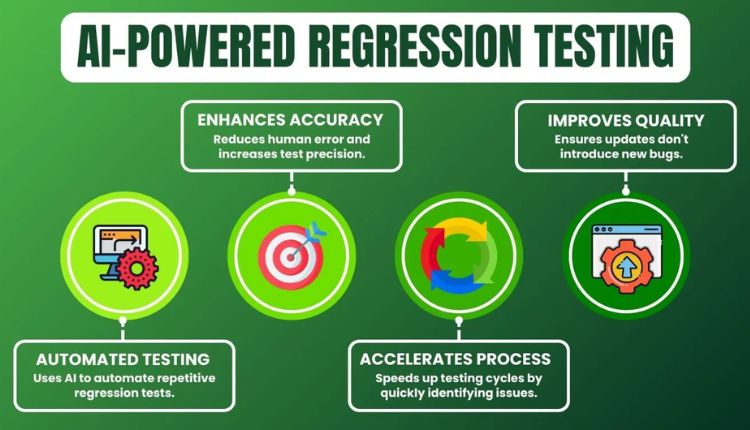
Automated regression testing helps teams prove that recent code changes do not break existing features. It saves time, reduces manual work, and keeps software quality steady through each release. To build and maintain an efficient automated regression testing framework, a team must design clear strategies, select practical tools, and manage test data with discipline.
A strong framework starts small and expands based on real project needs. It uses repeatable tests that track frequent issues and integrates with continuous integration pipelines for instant feedback. Teams that organise test cases by risk, reuse existing scripts, and apply AI-supported features such as self-healing tests see faster cycles and fewer maintenance delays.
Maintaining an effective setup means regular updates, removal of outdated tests, and review of test results. Scalable test suites, version control systems, and smart triage methods help teams detect problems early and keep automation efficient. These steps form the foundation for consistent, high-quality releases as software evolves.
Building an Automated Regression Testing Framework
A well-structured regression ai testing framework defines how software teams plan automation, select tools, and integrate continuous testing into development pipelines. It sets the foundation for consistent execution, faster feedback, and easier scaling across projects and environments.
Select Appropriate Automation Tools
The right tools simplify test development, execution, and maintenance. Modern platforms reduce human effort through features such as natural language authoring, AI-based self-healing, and cross-browser execution.
Modern platforms reduce human effort through features such as natural language authoring, AI-based self-healing, and cross-browser execution, making it easier for teams to develop and maintain tests. Selecting the right tools from options like website regression testing tools listed by Functionize ensures the framework can scale with the project’s needs. These tools not only automate repetitive tasks but also offer smarter decision-making capabilities, reducing the chance of human error. With the right tools in place, teams can quickly adapt to changes and keep the testing process efficient throughout the development cycle.
Define an Automation Strategy
Teams should begin with a clear testing strategy that outlines why automation is needed and what outcomes to expect. They must define coverage goals, scope boundaries, and measurable success indicators. This includes identifying stable features that benefit from automation and leaving dynamic or one-off test cases for manual validation.
A good practice is to categorize test ai cases by frequency, business risk, and change rate. Teams can use this data to decide which tests to automate first and how frequently to run them. Creating test suites that target core workflows, such as login, checkout, or report generation, guarantees consistent software behavior after each release.
Every automation plan also requires proper team roles. Test architects should guide tool selection, QA engineers should handle script development, and product owners should help validate business relevance. This division of responsibilities keeps automation aligned with development priorities.
Design the Test Automation Framework
A solid framework defines structure and flow for automated tests. This includes folder organization, naming conventions, setup methods, and reporting logic. The goal is to make every test easy to locate, reuse, and update.
Frameworks usually contain layers such as test data management, driver configuration, and reusable utility functions. They enable modularity, which helps teams modify or extend tests without major redesign. Reusable scripts also reduce redundancy and maintenance time.
Teams should build flexibility into their architecture by supporting hybrid execution modes, like local, remote, or cloud-based. Parallel execution can shorten feedback cycles and improve test coverage. Ongoing documentation is necessary so new testers can quickly understand and contribute to existing suites.
Integrate with CI/CD Pipelines
Continuous integration and delivery depend on automated tests that run consistently across builds. Integrating regression tests into pipelines allows earlier detection of failures and reduces the chances of production defects. Tests can trigger automatically after every commit or daily build.
Integrations should include automated reporting and notifications. If any test fails, teams can trace the issue directly from version control to specific code changes. This promotes teamwork between developers and QA engineers.
Scheduling regression suites during off-hours maximizes test time without blocking development. Cloud execution options also enable parallel runs across multiple environments, keeping results uniform across browsers and devices. With thoughtful design, the framework becomes a natural part of the pipeline rather than an isolated activity.
Maintaining and Optimizing Automated Regression Test Suites
An efficient regression testing framework supports consistent software delivery, accurate feedback, and sustainable test maintenance. Teams that apply structured test selection, data control, and environment stability achieve faster and more meaningful results.
Test Case Selection and Prioritization
A regression suite should only include test cases that protect high‑risk business areas or functions affected by recent changes. Through impact analysis, teams can identify which tests relate to modified components and use this to prioritize tests. High‑priority scenarios such as login, checkout, or data transfer should execute first, as they detect major issues early.
Many teams organize regression test cases into groups like smoke tests, API tests, and unit tests. This layered setup shortens test execution time while keeping broad test coverage. Selective regression testing combined with parallel execution in CI/CD pipelines helps manage growing suites.
Automation tools often support tagging or filtering by feature, risk, or application module. These filters allow test engineers to launch focused runs without executing the entire regression test suite. As a result, test maintenance effort drops, and release cycles move faster under continuous delivery.
Guarantee Test Suite Reliability and Coverage
The strength of a regression suite depends on keeping it consistent and stable. Each automated test must follow clear test steps and use accurate selectors, such as XPath selectors, that remain stable across interface updates. Flaky tests reduce confidence, so teams should regularly review logs, investigate false failures, and fix weak locators or timing issues.
Balanced test coverage across UI, API, and backend layers prevents gaps in validation. For example, end‑to‑end testing confirms functional flow, while API and unit tests verify system logic. Test results tracked through pass rate and failure patterns reveal areas that need extra checks or refactoring.
Effective test maintenance includes retiring outdated cases and updating those affected by new features. Reliable tests shorten debugging time and allow teams to rely on automation as a trusted checkpoint in software delivery pipelines.
Test Data and Environment Management
Accurate test data management supports repeatable and valid results. Synthetic or masked datasets reduce exposure of real user data and allow stable test execution in any environment. Clear separation between test logic and data files simplifies updates and enables automation tools to refresh input data automatically before each test run.
A consistent test environment is just as important. Matching configuration, database state, and service endpoints with production keeps results predictable. Teams can use container setups or scripting to rebuild environments for every cycle, enabling smoother parallel test execution.
Monitoring environment performance also helps detect slowdowns or mismatched versions that inflate execution time. Through structured control of data and environments, the regression suite maintains accuracy, supports continuous testing, and avoids unnecessary retesting.
Conclusion
An efficient automated regression testing framework depends on structure, consistency, and steady upkeep. Each part of the system, from script design to test data and environment setup, must stay organized and traceable. This focus allows teams to catch regressions early and correct them quickly.
Automation adds value only when tests remain stable and easy to maintain. Regular reviews, clean data management, and clear execution priorities help reduce wasted effort. In addition, simple reporting methods give teams visibility into progress and quality trends.
By combining a clear framework with good maintenance habits, teams can build a dependable safety net for each release. The result is faster feedback, fewer defects, and stronger confidence in software performance over time.