






A beautiful yard doesn’t just happen by chance. Homeowners usually begin the year with grandiose plans for landscaping, planting flowers, trimming bushes, and mowing lawns. However, the months pass by, the seasons change, and the once-perfect yard may lose its appeal very soon.
Grass becomes patchy, vegetation cannot grow, and weeds begin to replace it.
Landscape maintenance is not something you should only do once a year. Your outdoor area requires attention year-round because every season brings new challenges, such as summer heat and winter frost.
But wait, there’s good news. When you use the right strategy, it doesn’t have to be difficult to maintain your landscape year-round.
You will find in this guide easy tips that can help maintain your yard so it remains healthy, vibrant, and beautiful in all seasons.
1. Start With Seasonal Planning
Imagine the scenario where you have been working on perfecting your yard all through the spring only to see it gasping by the summer. Frustrating, right?
This is common, as most homeowners do not view landscaping as a long-term exercise but as a one-time project. Seasonal planning is the secret to a healthy yard.
Each season requires different types of care. Spring typically involves cleanup, fertilizing, and planting. Summer specializes in watering, cutting, and pest control. Autumn is perfect for trimming and adjusting plants for the colder seasons, and winter usually focuses on preserving plants and soil.
Developing a basic landscape maintenance calendar with the help of professional landscaping services can simplify the process. By organizing your yearly activities early, you will have a healthier, more manageable yard year-round.
2. Focus On Healthy Soil And Proper Watering
If you want good plants and green grass, it all begins with the soil.
Healthy soil releases nutrients, supports roots, and helps plants absorb water effectively. Without that, even the most beautiful plants can have trouble surviving.
The easiest way to improve soil health is to add organic matter, such as compost or mulch. Using compost provides the soil with natural nutrients, whereas using mulch helps preserve soil moisture and temperature.
Watering habits are also significant. Most people who own a home assume that watering plants frequently will eventually make them grow faster. But shallow watering may weaken roots in the long run.
Deep watering stimulates root growth; roots grow stronger and deeper into the soil.
Also, pay attention to drainage. Areas that do not dry after rainfall may require improved drainage to prevent root damage and plant disease.
3. Keep Grass And Plants Properly Trimmed
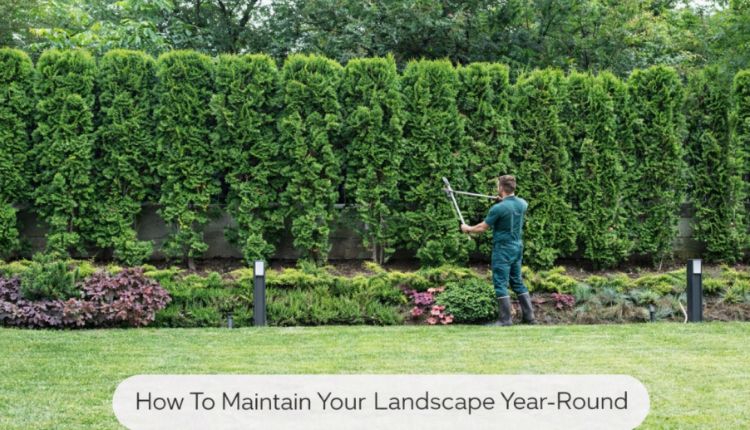
One of the simplest ways to maintain a landscape is to trim it regularly to keep it healthy and appealing.
Excessive grass growth can weaken the grass and make it uneven, and excessively grown shrubs may block sunlight from other plants. Untrimmed branches may also serve as shelters for pests.
Frequent mowing stimulates grass growth, making it thick and strong. By trimming grass, healthy roots and healthy growth are encouraged.
There’s more, though.
Cutting bushes and trees enables plants to channel their energy into healthy growth. Clearing up dead or damaged branches also enhances air circulation around plants, reducing the likelihood of disease.
The key is consistency. Rather than letting the plants grow so large, trim them regularly throughout the year. Small, consistent maintenance tasks can ensure your landscape appears clean and well-tended.
4. Prepare Your Landscape For Seasonal Changes
There are continuous changes in the landscape throughout the year. Changes in temperature, rainfall, wind, and sunlight all affect plant health.
Preparing your landscape for each season helps prevent damage before it starts.
In spring, the cleanup of debris deposited during winter enables new developments to begin. Leaves and dead plants should also be cleared to minimize pest problems.
When the summer is hot, it becomes necessary to protect plants against heat stress. Adding mulch around plants helps retain moisture and conserve heat in the soil around the roots.
The most suitable time to prune and fertilize is in the fall to prepare plants for colder weather. Most trees and bushes also grow more robustly when they are planted earlier in the year.
Winter maintenance often focuses on making sensitive plants frost-hardy and reviewing irrigation systems to suit cooler temperatures.
5. Schedule Professional Landscape Inspections
Even careful homeowners may miss some issues in their landscapes.
Problems such as imbalances in soil nutrients, irrigation inefficiencies, or pest infestations can develop gradually. Plants can also be in distress by the time they are obvious.
Professional landscape inspections can help identify these issues early.
The knowledgeable landscapers can assess the condition of plants, soil, and irrigation systems. They can prescribe solutions to issues before they escalate.
Just imagine it is a check-up of your yard. Professional visits now and then should be scheduled to ensure your landscape remains healthy and beautiful throughout the rest of the year.
A Beautiful Landscape Is Built Through Consistency
A thriving landscape isn’t created in a single weekend project. Instead, it develops through consistent care over time.
When you plan seasonal maintenance, improve soil health, trim plants regularly, and prepare for changing weather, your yard becomes easier to maintain.
Small actions done consistently prevent larger problems from appearing later.
With the right habits and attention throughout the year, your landscape can remain healthy, vibrant, and enjoyable in every season.