






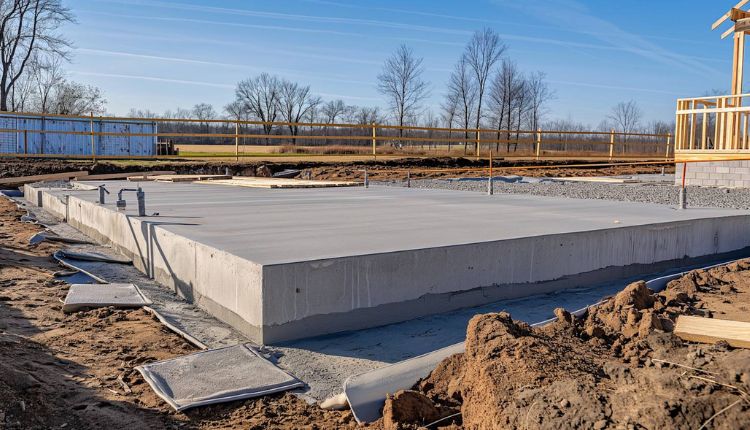
When an aspiring builder buys their first shipping container, the instinct is to treat it like a house. They look at the footprint—8 feet by 40 feet—and assume they need a foundation that matches that footprint. They call a concrete contractor, frame up a massive rectangle, and pour thousands of dollars’ worth of cement to create a pristine, flat slab.
It looks beautiful. It feels permanent. And structurally speaking, it is almost entirely redundant.
Shipping containers are not stick-framed houses. They do not distribute their weight evenly along the perimeter walls. Understanding the unique engineering of these steel giants can save you thousands in site preparation costs and reveal why the smartest foundation is often the smallest one.
The “Bridge” Anatomy
To understand why a slab is overkill, you have to look at how a container is designed to travel.
When a container is loaded onto a ship, it is stacked nine high. The bottom container is holding up nearly 600,000 pounds of cargo above it. Yet, if you look closely at the ship’s deck, the container is not sitting on a flat surface. It is hovering.
The entire structural integrity of a shipping container lies in the four vertical corner posts and the “corner castings”—those heavy steel cubes at the eight corners of the box. The corrugated steel walls and the marine-grade plywood floors are merely infill. They are designed to hold the cargo inside, not to support the weight of the structure itself.
A shipping container acts like a bridge. It is designed to span the distance between its two ends without sagging. It is a “monocoque” structure engineered for extreme Point Loading.
The Concrete Fallacy
When you pour a full concrete slab for a container, you are creating a surface capable of supporting weight across every square inch. But the container is only transferring weight at four specific points (the corners).
This means that the concrete in the middle of the slab—the vast majority of what you just paid for—is doing absolutely nothing. It is merely a sidewalk for the ants living underneath your floor.
Unless you are using the slab as the finished floor of your interior (which is rare due to insulation needs), the slab provides no structural advantage over four simple concrete piers or mechanical supports placed at the corners.
The “Sinking” Risk of Gravel
Realizing a slab is expensive, many owners pivot to the cheapest option: a gravel pad or simply dropping the box on the dirt.
This is where the Point Load design works against you. Because all the weight is concentrated in those four corners, the pressure per square inch (PSI) at those points is massive.
If you place a fully loaded container on soft soil or a thin layer of gravel, the corners will punch through the surface like a high heel shoe in mud. If one corner sinks just two inches deeper than the others, the container “racks.”
A racked container is a twisted container. The frame distorts, and suddenly, the heavy cargo doors won’t open, or they swing open and refuse to latch. The steel is strong, but it is not flexible. Stability comes from a level, hardened connection point, not a soft bed of gravel.
The Airflow Argument
There is a secondary argument against the full slab (and direct ground contact) that has nothing to do with weight: Rust.
Even though containers are made of Corten “weathering” steel, they are not invincible. The underside of a container features steel cross-members that hold up the plywood floor. These members are often under-coated, but if they sit directly on a slab or damp ground, moisture gets trapped.
A full slab can wick moisture and hold it against the metal belly of the container. Over time, this constant dampness rots the wood flooring from the bottom up.
By lifting the container off the ground—supporting it only at the corners—you create a wind tunnel underneath. This airflow keeps the underside dry, preventing corrosion and deterring pests like termites or rodents from nesting against the warm metal.
Conclusion
The beauty of shipping container architecture is its efficiency. The box is pre-built; the structure is pre-engineered. It makes little sense to pair an efficient structure with an inefficient foundation.
Instead of burying your budget in a concrete slab that is 90% useless, focus on the corners. Whether you use concrete piers, railroad ties, or a specialized, adjustable shipping container stand, the goal is the same: Support the load where the engineers intended it to be supported. Let the corners do the heavy lifting, let the air flow underneath, and keep your concrete money for something you can actually see, like a skylight or a better front door.