






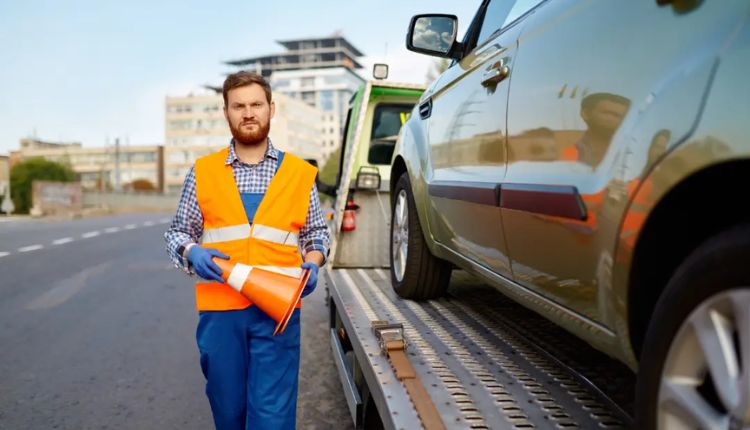
Roadside assistance and vehicle recovery are often confused, but they serve different purposes. Roadside assistance handles minor, on-the-spot repairs, whereas vehicle recovery is for more complex situations. Knowing the difference between these services helps you call the right provider, saving you time and money during a breakdown.
What Is Roadside Assistance?
Think of roadside assistance as “first aid” for your car. It is designed for minor mechanical failures or common mishaps that can be fixed on the spot, allowing you to get back on the road relatively quickly. These services are typically included in insurance policies, auto club memberships, or warranties for new cars.
The primary goal of roadside assistance is mobility. The technician arrives with the intention of fixing the problem right there on the shoulder of the road or in the parking lot where you are stranded.
Common Roadside Assistance Services
Roadside assistance covers the most frequent, low-level issues drivers encounter.
- Jump Starts: A dead battery is one of the most common reasons drivers call for help. Technicians carry heavy-duty portable jump starters to get your engine running again in minutes.
- Tire Changes: If you have a flat tire and a spare in your trunk, a roadside assistance provider will swap them out for you. If you don’t have a spare, or if the damage is severe, this might escalate to a towing situation.
- Fuel Delivery: Running out of gas is embarrassing, but it happens. Assistance providers can deliver a few gallons of fuel—enough to get you to the nearest service station.
- Lockout Assistance: Locking your keys inside the car is a classic mistake. Roadside techs carry specialized tools to unlock vehicle doors without damaging the weather stripping or windows.
- Minor Mechanical Adjustments: Sometimes a loose battery terminal or a simple hose reconnection is all that is needed.
When Is Roadside Assistance Appropriate?
You should call for roadside assistance when your vehicle is in a safe, accessible location (like a breakdown lane or driveway) and the issue is minor. If the car is generally intact and just needs a quick fix to become drivable again, this is your best option.
What Are Vehicle Recovery Services?
Vehicle recovery is the “emergency surgery” to roadside assistance’s “first aid.” This service is required when a vehicle cannot be fixed on the spot or is stuck in a location where standard towing or repair is impossible.
Recovery usually involves heavy-duty equipment and specialized operators. It is not about getting the car moving again immediately; it is about retrieving the vehicle from a difficult situation and transporting it to a safe location, such as a repair shop, impound lot, or garage.
Scenarios Requiring Vehicle Recovery
Recovery services handle the heavy lifting when things go seriously wrong.
- Accidents: If a car has been involved in a collision and is significantly damaged, it likely cannot be driven. Recovery trucks can winch smashed vehicles onto a flatbed to clear the road.
- Off-Road Incidents: Sliding into a ditch, getting stuck in deep mud, or rolling down an embankment requires specialized recovery winches and cranes. A standard tow truck usually cannot reach or pull a vehicle out of these situations without risking damage.
- Severe Breakdowns: If the transmission fails, the axle snaps, or the engine seizes, no amount of roadside tinkering will fix it. The vehicle becomes dead weight and must be recovered.
- Impoundment: Police-ordered towing for parking violations or other legal issues falls under recovery services.
Key Differences Between the Two
While there is some overlap—many companies offer both services—the operational differences are significant.
1. Scope of Work
Roadside assistance focuses on repair and mobility. The technician wants to get you driving again. Vehicle recovery focuses on retrieval and transport. The operator assumes the car is not going anywhere under its own power.
2. Equipment Used
A roadside assistance vehicle might be a standard pickup truck or a van stocked with tools, gas cans, and jumper cables. A vehicle recovery unit is much larger. It could be a flatbed truck, a hook-and-chain truck, or a rotator truck equipped with boom lifts and heavy-duty winches capable of pulling thousands of pounds.
3. Cost
Roadside assistance is generally cheaper. It is often a flat fee or covered by an annual membership. Vehicle recovery is more labor-intensive and requires expensive equipment, making it significantly pricier. Costs often depend on the complexity of the recovery (e.g., how deep in the ditch the car is) and the distance the vehicle needs to be transported.
4. Response Time
Roadside assistance is optimized for speed and volume; providers aim to get to you quickly because the fix is fast. Vehicle recovery can take longer because dispatchers need to send specific heavy machinery suited to your unique problem.
Choosing the Right Service
So, you are stranded. Who do you call? Assessing the situation accurately is crucial for getting the right help.
Ask yourself these questions:
- Is the car accessible? If you are on a paved road, roadside assistance can probably reach you. If you are in a ravine or stuck in deep mud on a dirt track, you need recovery.
- Is the car drivable with a minor fix? If a jump start or some gas will solve the problem, call roadside assistance. If the wheels are pointing in different directions or the engine is smoking heavily, you need recovery.
- Was there a collision? Almost all post-accident situations require recovery services because there may be unseen damage that makes driving unsafe.
If you are unsure, describe the situation clearly to the dispatcher. Tell them exactly where the car is, what happened, and if wheels are obstructed or damaged. If you are in Michigan, for instance, and you specifically request tow truck towing services in Ann Arbor, be sure to clarify if you just need a lift to a garage or if your car is stuck in a snowbank. The dispatcher can then decide whether to send a mechanic in a van or a heavy-duty flatbed.
Conclusion
In conclusion, it is important to prioritize safety while driving. By following the above-mentioned tips and guidelines, you can ensure a safer and smoother driving experience for yourself and others on the road.