






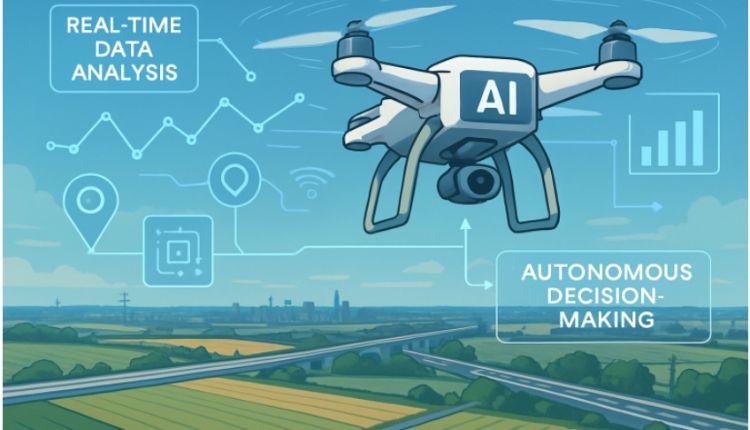
Artificial Intelligence (AI) is at the forefront of innovation in drone technology, fundamentally shifting how unmanned aerial vehicles operate and interact with their environments. AI-driven automation is unlocking new opportunities, from real-time decision-making to adaptive mission planning, making advanced capabilities like AI drone pilot systems increasingly accessible and impactful. As these advancements gain momentum, AI is no longer a futuristic concept but an intrinsic part of modern drone technology—a driving force propelling industry growth and creative problem-solving worldwide.
Across multiple industries, drones integrated with AI are empowering organizations to scale operations, improve precision, and respond dynamically to challenges that were previously insurmountable. By leveraging powerful machine learning and computer vision algorithms, these systems are no longer limited to simple remote control—they can interpret complex data and autonomously act with increasing sophistication. Drones now gather real-time intelligence, adapt missions mid-flight, and make rapid, on-the-spot decisions, helping businesses harness data in unprecedented ways.
Enhancing Autonomy and Decision-Making
AI algorithms are the core engines behind modern drone autonomy. By integrating deep learning and advanced sensor fusion, drones can process and interpret massive streams of data in real time. This equips them to react instantaneously to changing environmental factors—such as weather shifts, terrain obstacles, or moving targets—without waiting for human commands. These capabilities grant drones heightened flexibility and resilience, allowing them to operate in hazardous or dynamic environments where human intervention would be slow or dangerous. Autonomous drones routinely execute complex missions, such as search and rescue operations in disaster zones, precision agriculture in crop fields, and industrial inspections in environments that are inaccessible or unsafe for people.
Central to this evolution is computer vision, which enables drones to identify and classify objects, track moving subjects, and dynamically avoid obstacles. Sophisticated image recognition enables real-time mapping, 3D modeling, and environmental monitoring at a scale previously unimaginable. With AI-powered navigation and situational awareness, drones are becoming increasingly capable of operating “beyond visual line of sight” (BVLOS), thereby opening up significant opportunities for long-distance logistics and remote monitoring tasks.
Applications Across Industries
The cross-industry impact of AI-driven drones is profound, offering new solutions to persistent challenges that affect a variety of sectors:
- Agriculture: AI drones can assess plant health via multispectral imaging, detect diseases early, and precisely administer fertilizers or pesticides. With the ability to analyze hundreds of acres in a single flight, farmers gain invaluable insights that boost both yield and sustainability, reducing costs and environmental impact. Automated data collection enables faster response times and fosters smarter, more sustainable farming practices.
- Defense: Autonomous drones in military operations conduct reconnaissance, provide real-time battlefield updates, and execute precision strikes, all while minimizing human risk. The inherent flexibility of AI allows these drones to adapt and update mission plans mid-flight based on live sensor data, supporting troops with enhanced situational awareness and minimizing delays.
- Infrastructure: Smart drones inspect bridges, highways, railways, and power grids, identifying cracks or weaknesses before they become critical, thereby streamlining maintenance and preventing failures. They efficiently collect high-resolution imagery and generate comprehensive reports, enabling civil engineers to prioritize interventions and extend asset lifespans through proactive care.
Moreover, commercial sectors such as real estate, mining, and filmmaking are leveraging AI to automate mapping, surveying, and capturing cinematic footage, according to Reuters. In real estate, detailed 3D models and aerial photography offer potential buyers immersive virtual tours, while filmmakers achieve complex aerial shots with consistent quality and creativity.
Advancements in AI-Driven Drone Technology
Innovation in hardware and software continues to drive AI drone capabilities to new heights. High-performance onboard processors and edge computing allow drones to interpret sensor data and run neural network models in real-time, even in bandwidth-constrained environments. These advances reduce latency and increase safety, as drones no longer need to rely on ground stations for guidance or decision-making. The U.S. Department of Defense’s latest long-range drone initiative illustrates this progress, with prototypes achieving greater autonomy, longer range, and multi-mission capability thanks to advanced AI.
New frameworks also enable “swarming,” where multiple drones collaborate as a group, sharing data and dynamically adjusting formations to complete tasks more efficiently. Swarms can survey vast lands, map disaster zones, and carry out coordinated search missions by leveraging shared intelligence and distributed AI algorithms. This technology holds promise for coordinated missions in agriculture, emergency response, and automated surveying, among other applications.
Additional breakthroughs in battery technology, lightweight materials, and miniaturization of sensors have made it possible for smaller yet more powerful drones to perform increasingly complex tasks, broadening the market and accessibility for businesses of all sizes.
Challenges and Considerations
- Regulatory Hurdles: Navigating the complex web of international and regional drone regulations is crucial. Agencies are working to create structured, dynamic rulesets that balance innovation with safety, especially for BVLOS operations and urban deployments. Rules regarding certified operator training, restricted zones, and automated flight systems are evolving as the technology matures, with collaboration between industry and government at the forefront of progress.
- Ethical Implications: Autonomous drones raise significant ethical concerns, particularly in applications involving surveillance, privacy, and the development of lethal autonomous weapons. Ensuring that AI decisions are transparent and auditable is a top priority. Responsible research, transparent algorithms, and ongoing stakeholder engagement are essential to effectively manage these risks.
- Security Concerns: As drones become increasingly connected and AI-powered, they’re at a greater risk of cyberattacks. Protecting communication channels, firmware, and mission-critical data is a top priority for both manufacturers and operators. Cybersecurity solutions, robust encryption, and secure software architectures must keep pace with technological developments to safeguard public trust and operational reliability.
Future Prospects
The future of AI-powered drones is poised for rapid expansion, ushering in a new era in robotics, logistics, and connectivity. Researchers are exploring designs for hybrid aerial-ground robots, even tighter integration with IoT devices, and greater autonomy for truly unmanned missions. As AI models become more capable, drones will increasingly handle predictive maintenance, disaster response, and large-scale logistical challenges, thereby improving efficiency and reducing costs across various industries.
Continued investment, robust policy frameworks, and a commitment to ethical standards will unlock new possibilities—shaping a world where drones safely and efficiently amplify human potential. The evolution of autonomous aerial vehicles will not only reshape industries but also influence the everyday lives of people everywhere, provided that we navigate the perils and promise of AI with care and foresight. By responsibly managing growth, society can harness drones to create safer communities, improve resource management, and expand humanity’s reach to previously unattainable heights.