






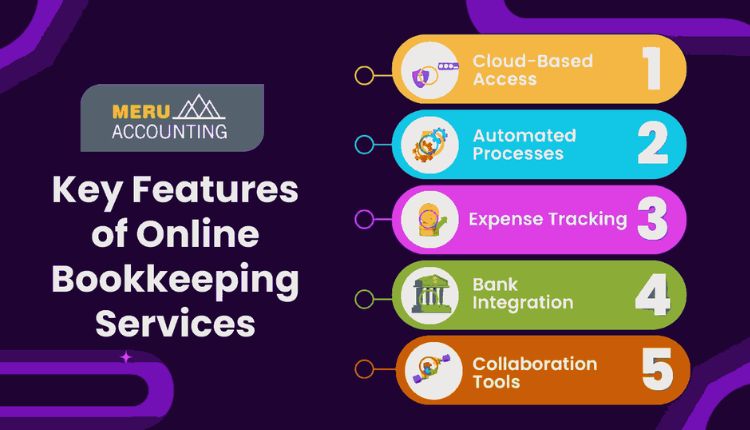
Online bookkeeping has become the default choice for startups, freelancers, and growing businesses. Cloud access, real-time reporting, and lower costs make it appealing. But like any financial system, it comes with trade-offs.
Understanding online bookkeeping services risks isn’t about avoiding digital tools. It’s about knowing what can go wrong and how smart businesses mitigate those risks before they turn into costly mistakes.
This article breaks down the most common risks, how they show up in real businesses, and what to look for when choosing a provider.
Why Businesses Still Worry About Online Bookkeeping Services Risks
The shift to cloud-based finance happened fast. Many businesses adopted online bookkeeping for convenience without fully evaluating:
-
Who oversees the data
-
How errors are caught
-
What happens when systems fail
Most virtual bookkeeping concerns don’t come from technology itself, but from how it’s implemented and managed.
The Most Common Online Bookkeeping Services Risks
1. Data Accuracy Without Oversight
Automation speeds things up, but it doesn’t think.
One of the biggest online bookkeeping services risks is incorrect categorization that goes unnoticed. Automated systems may misclassify expenses, overlook accruals, or fail to flag inconsistencies.
Without review, small errors compound over time.
Mitigation: Human review by experienced professionals, not just software rules.
2. Limited Context Around Financial Decisions
Online systems record transactions, but they don’t understand context.
This creates virtual bookkeeping concerns such as:
-
Revenue recorded too early
-
Expenses categorized correctly but strategically misleading
-
Reports that are technically accurate but operationally confusing
This is why some modern firms, like CoCountant pair online bookkeeping with controller-level review to interpret numbers, not just log them.
3. Data Loss Risks Bookkeeping Systems Must Address
Cloud systems are secure, but not immune.
Data loss risks bookkeeping teams consider include:
-
Sync failures
-
Third-party app disruptions
-
Accidental deletions
-
Incomplete backups
While rare, these events can be serious if safeguards aren’t in place.
Mitigation:
-
Redundant backups
-
Access controls
-
Clear recovery protocols
4. Over-Reliance on Software Alone
Many businesses assume software replaces financial judgment. It doesn’t.
This leads to bookkeeping risks and mitigation gaps such as:
-
No review process
-
No escalation path for anomalies
-
No accountability for financial quality
Tools enable bookkeeping. People ensure reliability.
Comparing Risks: Software-Only vs Supported Online Bookkeeping
|
Risk Area |
Software-Only Tools |
Supported Online Services |
|
Data accuracy |
Automated only |
Reviewed regularly |
|
Error detection |
Rule-based |
Human + system |
|
Contextual insight |
Low |
High |
|
Data loss protection |
Platform-dependent |
Platform + process |
|
Accountability |
Unclear |
Defined ownership |
Businesses focused on financial clarity tend to favor models with both technology and oversight.
Security Concerns in Virtual Bookkeeping
Are Online Bookkeeping Services Secure?
Security is a common concern and often misunderstood.
Most reputable providers use:
-
Bank-level encryption
-
Role-based access
-
Secure cloud infrastructure
However, virtual bookkeeping concerns increase when:
-
Access permissions aren’t controlled
-
Former employees retain login access
-
Multiple apps are loosely connected
Security is as much about process as it is about technology.
How Businesses Mitigate Online Bookkeeping Services Risks
Effective bookkeeping risks and mitigation strategies include:
-
Regular reconciliations
-
Separation of duties
-
Clear review timelines
-
Transparent reporting standards
Some firms build these practices into their service model, reducing reliance on the client to catch issues.
When Online Bookkeeping Becomes Risky for Growing Businesses
Online bookkeeping works best when complexity is low.
Risk increases when:
-
Revenue streams multiply
-
Payroll grows
-
Compliance requirements expand
-
Investors request detailed reporting
At this stage, unsupported systems create blind spots. Businesses often transition to services that add financial oversight alongside automation.
FAQs: Online Bookkeeping Services Risks
What are the biggest online bookkeeping services risks?
The biggest risks include inaccurate data, lack of oversight, and misinterpreted financial reports.
Are virtual bookkeeping services less reliable than in-house teams?
Not necessarily. Reliability depends on review processes and accountability, not location.
How do businesses reduce data loss risks bookkeeping systems face?
Through backups, access controls, and working with providers that have strong recovery protocols.
Is automation alone enough for bookkeeping?
Automation helps, but without review it increases the risk of unnoticed errors.
How can businesses mitigate bookkeeping risks effectively?
Combining technology with experienced financial oversight is the most effective approach.
Final Perspective: Risk Comes From Gaps, Not the Cloud
Online bookkeeping isn’t risky by default. Gaps are.
The real online bookkeeping services risks appear when businesses rely on tools without processes, reports without review, and data without interpretation. When automation is paired with accountability, as seen in service models that include financial oversight, the risks drop significantly.
For businesses evaluating online bookkeeping, the question isn’t whether to go digital. It’s whether the system includes the right checks, context, and expertise to support confident decisions.