






Procurement decisions in automotive electrical systems rarely fail because of obvious oversights. They fail because of assumptions — assumptions about consistency, about process control, about how a supplier performs under production pressure rather than during a sales demonstration. When an electrical terminal fails inside a vehicle harness, the downstream consequences extend well beyond the terminal itself. Warranty claims, field replacements, and production line stoppages all trace back to a single point of contact that was never adequately evaluated at the source.
Engineering procurement teams working in automotive and adjacent industries face a specific challenge: the components they specify are often small in size and unit cost, but disproportionately large in their impact on system reliability. A terminal that performs adequately in isolation may behave differently under vibration, thermal cycling, or connector mating forces encountered in real vehicle environments. The question of how to evaluate a manufacturer — not just a component — is one that many procurement processes either skip or address too late.
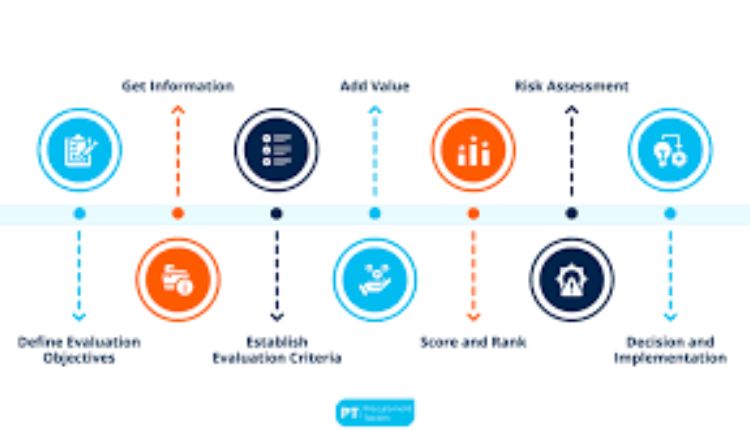
This framework is designed to give engineering procurement teams a structured approach for assessing manufacturers before a sourcing commitment is made. It covers the areas where evaluation tends to be weakest: process visibility, quality infrastructure, traceability, and long-term supply continuity.
Understanding What You Are Actually Evaluating
When procurement teams begin searching for automotive electrical terminals manufacturers, the initial focus tends to land on product specifications — material type, plating thickness, contact resistance ratings. These are necessary, but they describe the output of a manufacturing process, not the process itself. A rigorous evaluation starts with understanding that a terminal’s reliability over time is a product of manufacturing discipline, not just engineering design.
The distinction matters because two manufacturers can produce terminals that meet the same dimensional and material specifications while operating under entirely different levels of process control. One facility may run systematic capability studies on its stamping and plating lines. Another may rely on end-of-line inspection to catch defects after they occur. The first approach produces consistent output. The second produces variable output with a quality gate at the end — which is not the same thing.
Sourcing teams that look only at the product sample are evaluating a snapshot. They are not evaluating the system that will produce the ten-thousandth unit six months into a production run. The framework below is built around this distinction: it treats manufacturer evaluation as a process audit, not a product review.
Why Process Capability Matters More Than Approved Samples
Approved samples are a standard part of any supplier qualification process, but they carry an inherent limitation. Samples are typically produced under controlled or monitored conditions, often with additional attention paid to dimensional conformance and surface finish. They represent what the manufacturer is capable of producing, not what it consistently produces across a full production run.
Process capability data — specifically whether a supplier measures and tracks variation in its core operations — tells a more accurate story. Stamping operations that hold tight tolerances across a production shift indicate a process that has been characterized and controlled. Plating operations where bath chemistry is monitored continuously indicate a facility that understands how process drift translates into part variation. These are not advanced quality concepts; they are operational fundamentals. Their presence or absence signals the maturity of the manufacturing environment.
Evaluating Quality Management Infrastructure
Quality certifications are a starting point, not an endpoint. IATF 16949, the international standard for quality management systems in automotive production, establishes a baseline framework for how a manufacturer should manage its processes, documentation, and corrective action systems. A manufacturer holding this certification has demonstrated that its quality system meets a recognized structural standard. What it does not guarantee is how vigorously that system is applied day-to-day on the production floor.
The more informative evaluation happens during a direct facility assessment. Procurement teams should ask to review internal audit results, corrective action logs, and process failure mode analysis documentation. These records reveal how the organization identifies problems, how quickly it responds to them, and whether corrective actions address root causes or simply manage symptoms. A supplier that can show a clear record of problem identification and resolution is demonstrating a quality culture, not just a quality certificate.
Traceability Systems and Their Role in Risk Management
Traceability in terminal manufacturing refers to the ability to trace any shipped part back to the specific production run, raw material lot, and process parameters under which it was made. For automotive applications, where field failures may surface months or years after shipment, traceability is not an administrative convenience — it is a risk management tool.
When a terminal failure pattern emerges in the field, a supplier with strong traceability can identify the affected population quickly, narrow the scope of any recall or containment action, and provide data to support root cause analysis. A supplier without that capability leaves the OEM or Tier 1 customer managing a broader, less defined problem. The cost difference between a contained corrective action and a wide-scope field campaign is significant. Traceability infrastructure is one of the factors that determines which outcome is possible.
Incoming Material Controls and Supplier Chain Visibility
Terminal manufacturers depend on upstream suppliers for raw materials — copper alloy strip, tin or gold plating materials, and plastic housings where applicable. The consistency of the finished terminal is partly a function of the consistency of those incoming materials. A manufacturer that conducts incoming inspection on raw material lots and maintains approved supplier lists for its own supply chain is managing risk at a level that reflects how automotive supply chains actually work.
Procurement teams should ask how incoming material variation is handled. If a copper alloy lot arrives with hardness or conductivity outside specification, what is the supplier’s process? Is there a hold and test protocol, or does material move directly to production? The answer to that question reflects whether the manufacturer thinks about quality as a system or as a series of individual checkpoints.
Assessing Manufacturing Process Depth and Tooling Ownership
The breadth of what a manufacturer controls in-house has a direct relationship to its ability to respond when something changes. A supplier that owns its stamping tooling, controls its own plating lines, and performs its own assembly operations has more variables within its direct control than one that subcontracts major steps in the process. This is not to say that subcontracting is inherently disqualifying — many capable manufacturers use specialized external partners effectively — but the procurement team needs to understand exactly where process ownership begins and ends.
Tooling ownership is a specific area worth examining. Terminals are produced from precision stamping dies, and die wear is a normal part of production life. A supplier that owns and maintains its tooling in-house can manage wear-related dimensional drift more directly than one that sends tooling to an external tool shop for maintenance. The frequency and rigor of die maintenance schedules is a practical indicator of how the manufacturer manages long-term process stability.
Engineering Support Capacity During Development and Change Management
The relationship between an automotive OEM or Tier 1 supplier and a terminal manufacturer is rarely static. Design changes, application expansions, and connector system updates require the terminal manufacturer to respond with engineering resources, not just production capacity. A manufacturer whose engineering team is accessible and experienced with application-level requirements — such as those defined in standards bodies like the SAE International framework for automotive electrical connectors — adds more value over the program lifecycle than one that simply fulfills purchase orders.
Change management capability is equally important. When a specification change is required — whether driven by a design update or a regulatory adjustment — the manufacturer’s internal change control process determines how that change moves from approval to production without introducing uncontrolled variation. A structured engineering change request process, with defined review steps and validation requirements, is a sign of a supplier that takes application engineering seriously.
Supply Continuity and Capacity Planning Transparency
Supply continuity is an area that procurement teams often evaluate based on current capacity rather than projected capacity. A manufacturer that is well-suited to current volume requirements may become a constraint as program volumes ramp. Conversely, a supplier whose capacity far exceeds current demand may be carrying risk from other customer programs that could affect lead times or material availability during shortage periods.
The more useful evaluation asks how the manufacturer plans and communicates capacity. Does it proactively share capacity forecasts with key customers? Does it have documented procedures for managing allocation during material shortages? Has it navigated supply disruptions in recent production years, and what did its response look like? These questions shift the evaluation from a static snapshot of current capability to a dynamic view of how the supplier manages uncertainty over time.
Geographic and Logistics Considerations
Manufacturing location affects more than unit cost. Lead time, customs complexity, logistics risk, and the practicality of site visits all vary based on where production occurs. Procurement teams sourcing components for high-volume automotive programs should understand the full landed cost and lead time picture, including the buffers required to manage transit variability. A supplier located closer to the customer’s assembly facility may offer logistical advantages that offset a higher unit price, particularly for programs with tight inventory management requirements.
Bringing the Evaluation Together: A Practical Summary
Evaluating a terminal manufacturer effectively requires moving beyond product-centric qualification and building an assessment that addresses process, quality infrastructure, engineering capability, and supply resilience. The framework described here is not exhaustive, but it covers the areas where procurement decisions are most frequently made on incomplete information.
The evaluation should produce a clear picture of how the manufacturer operates under normal conditions and how it responds when conditions are not normal. Both matter. A supplier that performs well when everything is stable is not the same as a supplier that manages disruption, addresses variation, and supports its customers through design changes and volume transitions.
For engineering procurement teams working under pressure to qualify components quickly, the temptation is to compress evaluation steps. The operational risk of that shortcut surfaces later — in warranty data, in field reports, or in a production stoppage that traces back to a terminal specification that was never thoroughly vetted at the source. The framework above is designed to prevent that outcome by making evaluation systematic, evidence-based, and oriented toward the factors that actually determine long-term supply performance.