






Key Takeaways
- Start with the fluid profile, not just the desired flow rate.
- Viscosity, temperature, density, solids, chemistry, and shear sensitivity affect pump selection.
- Match the pump type to the actual process, pressure, flow range, and fluid behavior.
- Check materials, seals, suction conditions, and NPSH before purchasing.
- Avoid oversizing, which can increase energy use, wear, and operating problems.
- Consider maintenance access, spare parts, controls, safety, and total lifecycle cost.
- A reliable pump selection should account for both normal and worst-case operating conditions.
Selecting an industrial pump begins with the liquid, not a catalog page. A pump that performs well with clean water can lose capacity, consume excess power, wear prematurely, or leak when it encounters hot oil, viscous syrup, abrasive slurry, or a volatile solvent. For applications involving thick fluids and dependable volumetric transfer, a C&B Equipment roper gear pump may be a practical option when its materials, speed, pressure range, and seal arrangement match the duty. The right design must also fit the entire process. Required flow, discharge pressure, suction conditions, piping losses, temperature swings, solids content, batch changes, and maintenance access all influence whether a pump will provide reliable service. Treat pump selection as a system decision rather than a simple equipment purchase.
Why Pump Selection Starts With The Fluid
Flow rate alone does not define the job. Fluid behavior affects hydraulic efficiency, motor load, internal leakage, seal life, wear rate, and the likelihood of cavitation. Published performance curves commonly use water as the test fluid, so process conditions must be applied before assuming a listed capacity will be achieved in service. Start with five questions: What is being pumped? What flow range is required? What pressure or head must be overcome? How can the liquid change during normal, start-up, cleaning, or upset conditions? What happens to the process if the flow stops or the pressure rises?
Key Fluid Properties To Review
A complete process specification should document the normal condition and credible worst case for each property below.
- Viscosity: Thick liquids create friction and may need lower speed, larger internal passages, or a positive displacement design.
- Density and specific gravity: Heavier liquids increase hydraulic power and can require a larger motor.
- Temperature and vapor pressure: Heat can reduce viscosity, raise vapor pressure, alter seal performance, and increase cavitation risk.
- Solids content: Record particle size, concentration, hardness, fiber length, and whether solids settle when flow stops.
- Chemical properties: Acids, salts, solvents, and cleaning chemicals may attack metals, elastomers, and seal faces.
- Shear sensitivity: Products such as emulsions, polymers, food ingredients, and biological materials can lose quality under aggressive pumping.
Choosing Between Centrifugal And Positive Displacement Pumps
Centrifugal Pumps
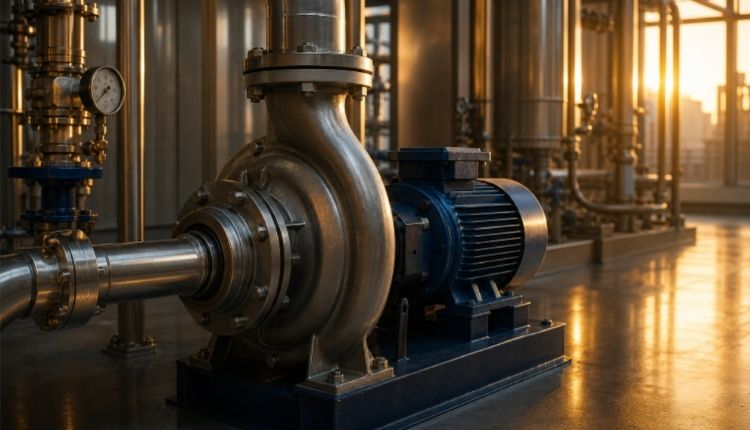
Centrifugal pumps transfer energy from a rotating impeller to the fluid, making them a common choice for relatively low-viscosity liquids and higher-flow services. Their actual operating point depends on the intersection of the pump curve and the system curve, so piping resistance and valve position matter greatly.
Positive Displacement Pumps
Positive displacement pumps move a defined volume during each rotation or stroke. Gear, lobe, screw, diaphragm, and piston designs are often used for viscous products, metering duties, and services requiring steadier flow across changing pressure. They can generate damaging pressure if discharge flow is blocked, so properly designed relief protection is essential. Neither pump family is automatically superior. Compare them by viscosity range, expected flow variation, pressure response, solids tolerance, shear exposure, control method, allowable leakage, and maintenance needs. A clean, thin liquid at high flow rates may favor centrifugal equipment, while a thick liquid requiring consistent transfer may favor a positive-displacement design.
Match The Pump To System Requirements
The pump must overcome the actual system, including elevation change, pipe length and diameter, elbows, reducers, filters, control valves, tank pressure, and friction losses. Confirm required flow and total dynamic head across the full operating range, not only at one ideal setpoint. Suction conditions deserve equal attention. Long suction lines, undersized pipe, hot fluid, restrictive strainers, or excessive suction lift can reduce available suction pressure and lead to noise, vibration, pitting, and loss of capacity. Check the available net positive suction head against the pump requirement, maintaining an adequate operating margin.
Materials, Seals, And Chemical Compatibility
Choose wetted materials only after reviewing fluid chemistry, concentration, operating temperature, cleaning solution, and exposure time. Cast metals, stainless steels, engineered plastics, and specialty alloys each have useful applications. Still, a material that is compatible at room temperature may fail at higher temperatures or at different concentrations. Seal selection is equally important. Mechanical seals, packing, double seals, flush plans, or sealless designs should be evaluated according to leakage tolerance, emissions requirements, worker safety, and the cost of product loss. Confirm compatibility for seal faces, gaskets, O-rings, and other elastomers, not just the pump casing.
Managing Solids, Abrasion, And Shear
Dirty fluids require more than a standard clean-liquid pump can provide. Abrasive grit can erode impellers, casings, and seal faces, while soft solids, crystals, sludge, and fibers can bridge narrow clearances or clog passages. Select an appropriate passage size and a design suited to the specific solids profile. For shear-sensitive products, reduce speed where possible and select a gentler pumping action. Strainers, filters, flush systems, and properly sized suction piping can protect equipment, but they must be maintained. A clean-water pump installed on wastewater sludge, for example, may quickly clog or wear if the solids duty is ignored.
Energy Use, Controls, And Variable Demand
Oversizing often leads to unstable control, unnecessary throttling, recirculation, heat buildup, and wasted energy. When demand varies, a variable-frequency drive can match speed to flow more efficiently than a throttling valve in many centrifugal applications. Still, variable-speed operation must remain within minimum-flow, cooling, lubrication, vibration, and motor limits. Compare the total cost of ownership, including energy, downtime, seals, spare parts, labor, and expected service life. The lowest purchase price can become the most expensive option when it operates far from its efficient range or requires frequent repair.
A Practical Pump Selection Process
- Identify the liquid and document normal and worst-case properties.
- Define the required minimum, normal, and maximum flow range.
- Calculate static head, pressure, and piping friction losses.
- Evaluate suction piping and available NPSH.
- Select a pump family suited to the fluid and duty.
- Verify wetted materials, seals, and elastomers.
- Confirm motor power, controls, relief protection, and operating limits.
- Review start-up, shutdown, cleaning, maintenance, access, and safety needs.
- Validate the final selection with supplier performance data or a qualified engineer.
Common Pump Selection Mistakes
- Selecting solely by flow rate without checking viscosity or temperature.
- Applying water-based curves directly to thick, hot, or volatile liquids.
- Ignoring suction piping, vapor pressure, and cavitation risk.
- Choosing materials from habit instead of compatibility data.
- Oversizing for an assumed safety margin.
- Forgetting relief protection on a positive displacement system.
Plan For Maintenance From The Start
Design choices affect every future repair. Allow access for seals, bearings, couplings, and lifting equipment. Where safe and practical, use isolation points that permit service without draining large sections of the system. Monitor pressure, temperature, vibration, motor load, leakage, and output on critical duties. Rising noise, heat, or vibration, or declining flow, should trigger an investigation before failure occurs.
Final Pump Selection Checklist
- Fluid identity, viscosity, density, temperature, vapor pressure, and solids are documented.
- Flow, pressure, suction conditions, materials, seals, motor, and controls are confirmed.
- Safety, containment, relief, maintenance, and worst-case operating conditions are addressed.
Reliable pump selection comes from matching the real fluid and process to a workable design. Careful evaluation of chemistry, temperature, solids, suction conditions, controls, and service access helps prevent avoidable failures while protecting product quality, uptime, and operating cost.
Conclusion
Selecting an industrial pump for demanding fluids requires a complete understanding of the process, not simply comparing catalog ratings. By evaluating fluid properties, hydraulic requirements, pump type, materials, seals, suction conditions, energy use, and maintenance needs together, facilities can choose equipment that performs reliably under real operating conditions. A system-focused approach also helps reduce premature wear, unexpected downtime, energy waste, and costly repairs. Ultimately, the best pump is the one that safely and efficiently matches the fluid, system, and long-term operational needs.