






Key Takeaways
- Heat treatment changes an alloy steel part’s hardness, strength, toughness, and wear resistance.
- The right grade must be paired with the right final condition for the part’s workload.
- Quenching, tempering, annealing, normalizing, and stress relieving serve different production goals.
- Machining, tolerances, inspection, and traceability should be planned before treatment begins.
- Early heat treatment planning can reduce premature wear, distortion, cracking, and maintenance costs.
Choosing alloy steel for an industrial component is not simply a matter of selecting a familiar grade. The final heat treatment often determines whether a part delivers the hardness, strength, toughness, and service life required by its application. For example, 4140 alloy can be used for demanding shafts, pins, gears, and tooling components, but its performance depends heavily on the condition in which it is supplied and processed.
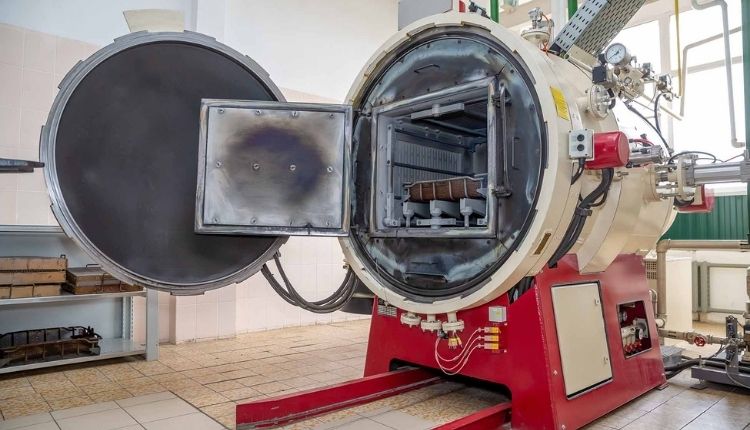
Heat treatment is the controlled heating and cooling of steel to alter its internal structure and mechanical properties. A well-planned cycle can help a component resist wear, impact, fatigue, or deformation. A poorly matched cycle can create brittleness, distortion, cracking, or costly machining problems.
Why Heat Treatment Matters
The same steel grade can perform very differently after different thermal cycles. Consider a rotating shaft: it may need a wear-resistant surface at bearing or seal locations while retaining a tough core that can absorb bending and shock loads. Selecting steel by grade name alone, without defining the final heat-treated condition, leaves a major performance variable unresolved.
How Heat Treatment Changes Steel
Heating steel to a controlled temperature, holding it long enough for the structure to change, and cooling it at a controlled rate affects the microstructure. That structure governs how the part performs in service.
- Hardness helps resist indentation, abrasion, and surface wear.
- Strength helps the part carry a load without permanent deformation.
- Toughness helps it absorb impact without cracking.
- Ductility provides useful deformation before fracture.
- Fatigue resistance supports longer life under repeated loading.
- Dimensional stability helps the part retain its intended size and shape.
These benefits involve tradeoffs. Extremely high hardness can reduce toughness, especially when a hardened part is not properly tempered. The goal is not to maximize every property, but to achieve the best balance for the actual application.
The Main Heat Treatment Methods
Quenching And Tempering
Quenching rapidly cools steel after heating, increasing hardness and strength. Because rapid cooling can introduce residual stress, distortion, and the risk of cracking, quenching is commonly followed by tempering. Tempering uses controlled reheating to reduce brittleness while retaining useful strength and hardness.
Annealing And Normalizing
Annealing softens steel, relieves stress, and can improve machinability or formability before extensive cutting or shaping. Normalizing uses a different cooling approach to refine grain structure and improve consistency, often after forging or other high-temperature work. Annealed material may still require final hardening before entering service.
Stress Relieving
Stress relieving lowers internal stress without making the same broad property changes as full hardening or annealing. It is valuable for large components, welded assemblies, and parts that receive uneven material removal during machining. Manufacturers following heat treatment technology news can also see how furnace controls and process monitoring continue to evolve.
Matching Treatment To The Part
Start with working conditions rather than a preferred grade. Identify the loads, impacts, vibrations, friction, temperatures, moisture, chemicals, expected life, and inspection requirements. Then determine whether the surface, core, or both need specialized properties.
- Gears need wear resistance, contact strength, and dimensional accuracy.
- Shafts often require toughness, fatigue resistance, and durable bearing surfaces.
- Dies may need high hardness and resistance to repeated contact.
- Heavy equipment parts need reliable impact resistance under changing loads.
- Oil and gas components may require strict documentation and performance under cyclic stress.
Machining And Fabrication Considerations
Heat treatment should shape the manufacturing route. Rough machining before treatment removes bulk material, while the steel is easier to cut. Finish machining, grinding, or honing afterward can bring critical features to tolerance. Designers should leave stock for dimensional movement and finishing operations because hardening can increase cutting forces, tool wear, and distortion.
Welding also requires attention. Higher-carbon or hardened steels may need qualified preheat, filler, cooling, and post-weld treatment procedures. Early communication among design, machining, welding, and heat treatment teams prevents late-stage changes that increase cost or delay delivery.
Common Design Mistakes To Avoid
- Choosing material based only on tensile strength.
- Ignoring the difference between surface hardness and core toughness.
- Applying a generic heat cycle to a thick, complex, or high-value component.
- Failing to account for geometry, section thickness, and distortion allowances.
- Machining to the final size before treatment without a finishing plan.
- Assuming material from different sources will behave identically without reviewing test data.
Quality And Traceability
Reliable parts require records that connect the delivered material to the finished component. Review the material test report, match the heat number to purchasing and production records, confirm grade and condition, and verify hardness at approved locations. Dimensional inspection after treatment is essential, while ultrasonic or magnetic particle testing may be justified for higher-risk applications.
Keeping furnace data, treatment records, inspection results, and part identification together supports repeat orders, warranty reviews, root-cause analysis, and safety-critical requirements.
A Practical Selection Checklist
- What loads, shocks, vibrations, and service temperatures will the part face?
- Which areas need hardness, and which need toughness or flexibility?
- What machining, welding, coating, or repair steps are planned?
- What tolerances must remain after treatment and finishing?
- Which material certificates and inspection records are required?
- Has the proposed material and process been proven on a similar component?
What May Change
Digital furnace controls, automated handling, energy monitoring, and data-based quality systems are making heat treatment more repeatable and easier to document. Continued investment in processing capacity, including the restart of heat treatment and finishing operations, also reflects the importance of dependable thermal processing in industrial supply chains.
Final Thoughts
Alloy steel selection is only the starting point. The heat treatment plan, machining sequence, inspection process, and service environment must work together. When those decisions are made early, manufacturers can produce industrial parts that perform more consistently, last longer, and require less unplanned maintenance.