






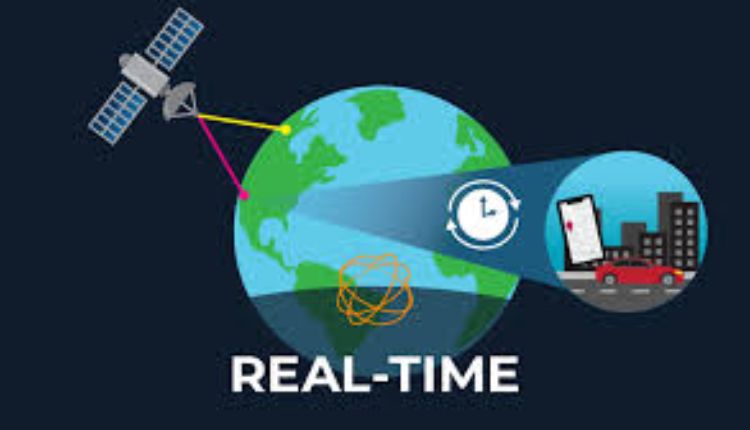
The dynamic digital world Real Time today is characterized by real-time systems, which are important to businesses, governments, and ordinary users. Instant messaging applications, real-time road traffic navigation, and online gaming—real-time technology can guarantee that data processing is not delayed.
During the past years, the demand for solutions with a real time nature has risen exponentially, as have cloud computing, IoT devices, artificial intelligence, and big data analytics. The users do not desire delayed responses, and they want the results immediately. Real-time systems help organizations make decisions faster, enhance customer experiences, and remain competitive in a digital-first world.
Real-time systems are characterized by some of the following leading characteristics:
- Immediate data processing
- Low-latency response
- Continuous data flow
- There is high reliability and accuracy.
Real time is not necessarily instant, but it implies that the system can act within some time constraint that is tolerable to its use. An example is a medical monitoring system, which could demand a millisecond response time, and a social media notification system, which could allow a couple of seconds.
With the changing nature of technology, real-time is becoming more affordable and available. This renders real-time technology one of the pillars of contemporary digital transformation that has impacted almost all industries worldwide.
How Real Time Systems Work
Real-time systems work with continuous input data reception, instant processing, and prompt delivery of output without any considerable delay. Real-time systems are dynamic and are in operation, unlike batch processing systems, which process data in batches at predetermined times.
A real-time system has a simple workflow that consists of:
- Sensors, users, and application data.
- Real-time processing by a server/processor.
- Immediate response or action on processed data.
Enhanced software, fast networks, and volatile hardware are important in real-time processing. Most event-driven architectures are applied within the real-time domain, where certain events cause an instant action. As an illustration, upon clicking a button on a site, the system would react immediately with updated information.
The most important aspect in real-time systems is timing. There are usually different categories of these systems:
- Hard real-time systems
- Soft real-time systems
The hard real-time systems should be able to adhere to deadlines because failure can lead to grave results. These are aircraft control systems and medical devices. Soft real-time systems are looser, in that rare delays are not an issue, including video streaming or internet chat systems.
Real-time systems today are usually built around the combination of cloud computing and edge computing in an effort to reduce latency. Real-time performance is much better through processing data nearer to the source. The combination enables the real-time technology to scale effectively and still be fast and accurate.
Relevance of Real-Time Data in Contemporary Businesses
Real-time data has emerged as an effective resource for businesses to make smarter and faster decisions. Having access to the second-by-second information enables businesses to react instantly to the changes in the market, the behaviour of customers, and organisational matters.
Real-time data is used by businesses to:
- Immediately check performance indicators.
- Identify and address the problems fast.
- Enhance customer interaction.
- Optimize supply chains
As an example, e-commerce systems are based on real-time information to monitor inventory status, dynamically update prices, and suggest users based on real-time user activities. Real-time analytics help financial institutions to identify fraud and track transactions in real time.
There are also real-time insights that help in making better decisions. Managers are able to get live dashboards that indicate the current conditions, as opposed to using old reports. This minimises risks and allows one to be proactive instead of reactive.
Real-time systems enable the support team to monitor the activity of the customers in real time, hence responding faster and more personally. Chatbots and live chat applications are very good examples of real-time applications that enhance customer satisfaction.
With the growing competition in all industries, there is a major advantage to the business that utilises real-time data processing. Real-time capabilities also assist organisations to be agile, efficient and responsive in a dynamic digital world.
Real Time Apps in Our Daily Life
The real time technology has a significant part in our lives without our awareness. Most of the digital services that people use daily rely on real-time systems to operate in a smooth and effective manner.
Examples of common real-time applications are:
- Messaging and video calling applications.
- GPS positioning and taxi-hailing services.
- Playing live and streaming.
- Smart home devices
The navigation applications apply the real-time traffic information to propose quicker paths and eliminate congestion. Ride-sharing services base their operations on real-time location tracking to find drivers as well as passengers immediately. Likewise, fitness trackers track the health-related data on the fly to offer instant feedback.
Real-time streaming is also used in entertainment; millions of users can access live events at the same time. Multiplayer games online have real-time communication to provide fair and synchronous gameplay among players all around the world.
Real-time technology is also good in terms of Smart home systems. Smart thermostats, security cameras, and voice assistants react immediately to the commands of users and environmental changes.
All these day-to-day applications showcase the way real-time technology increases convenience, safety, and efficiency. The real-time systems will keep on contributing to the way people relate to technology in their day-to-day activities as the devices are increasingly becoming connected.
Applications of Real-Time Technology in Healthcare
Healthcare is among the most important industries where real-time technology is helpful. Real-time systems enable medical practitioners to monitor patients and diagnose as well as respond to emergencies in a more effective manner.
The uses of real-time technology in healthcare include:
- Patient monitoring systems
- Emergency response management.
- Medical diagnostics and medical imaging.
- Telemedicine platforms
The vital signs of heart rate, blood pressure, and oxygen are continuously measured by real time patient monitoring devices. In case of abnormal readings, alerts are sent instantly to healthcare providers, thereby allowing timely action to be taken.
Real-time communication between ambulances, hospitals, and emergency teams in case of an emergency will save lives. Real-time sharing of data will ensure that medical personnel are ready when a patient comes.
The real-time video and data transmission have also increased telemedicine. Patients can be consulted remotely as doctors obtain live health data, which enhances healthcare access.
Overall, real-time technology enhances accuracy, speed, and patient safety in healthcare. As digital health solutions evolve, real-time systems will play an even greater role in improving outcomes and reducing healthcare costs.
Banking and Real Time Systems Finance
Security, efficiency, and customer trust are crucial in the finance and banking sector, and real-time systems are essential. All transactions, market data, and fraud detection must be processed instantly.
Financial uses of real time applications involve:
- Internet banking operations.
- It deals in stock markets.
- Fraud detection systems
- Payment gateways
Stock exchanges run on Real Time almost real-time data. Trades go up and down in milliseconds, and trading systems have to accommodate massive amounts of trade immediately so as to maintain fairness and precision.
Real-time monitoring is utilized by banks to identify suspicious activities. In case a transaction is somehow fraudulent, it will be blocked immediately, and the customer will be notified. Such a real-time response minimizes losses of money and increases security.
Online payment systems are also based on real-time processing. Users want to be instantly confirmed and updated whether they are paying bills or transferring money.
Financial institutions can enhance their transparency, minimise risks, and provide improved customer experiences by adopting real-time systems. Real-time capabilities are no longer optional in a very competitive industry such as the one being discussed.
Difficulties and Disadvantages of Real-Time Systems
Real time systems have a number of challenges and limitations in spite of their advantages. These systems need proper planning, technology, and professionalism in designing and maintaining them.
Common challenges include:
- It has high development costs and high maintenance costs.
- Complexity of system design
- Risks of data security and privacy.
- Scalability issues
The large volumes of data that need to be processed by real-time systems should be managed with minimum delay, and this can be a burden on infrastructure. Any delays or failures can have an effect on performance and reliability.
Another critical issue is security. Real-time systems are also vulnerable to cyberattacks since they have to deal with continuous data streams. The ability to conceal sensitive information and be fast is a challenge.
It is also difficult Real Time to scale. Real-time systems should be able to scale with user demand, but without making them more latency-prone. It can frequently involve sophisticated cloud and edge computing.
Despite these obstacles, technological progress has continued to overcome these hitches and make real-time systems as robust and available as possible.
Future Prospects of Real Time Technology
The future of real-time technology is bright because innovations keep pushing the boundaries. The real-time systems are becoming smarter, faster, and more efficient due to emerging technologies.
Key future trends include:
- Artificial intelligence integration.
- Expansion of edge computing
- IoT-based real-time system growth.
- Enhanced real-time analysis.
The AI-enhanced real-time systems are capable of processing data in real time and generating decisions or forecasts without human effort. It is especially helpful in such fields as autopilot vehicles and predictive maintenance.
By reducing latency, edge computing increases the real-time performance by processing data as it comes nearer to the source. Real-time communication will be even faster together with 5G networks.
With the growing number of Iot devices, real-time data processing will be needed to manage interconnected systems. Real-time technology will be the center of innovation in the form of smart cities and industrial automation.
Conclusion
The modern digital ecosystem has introduced real-time technology as an essential element. In the business and medical sectors and in finance and everyday utilisation contexts, real-time systems allow the immediate processing of data, quicker decisions, and enhanced user experiences.
Though the issues of cost, complexity, and security persist, due to the constant development of technology, real-time solutions are becoming efficient and scalable. With the ever-changing industry, in the future, real-time technology will be an important factor in creating a smarter, more connected future.
FAQs
What is real-time technology?
‘Real time’ refers to the processing and responding of data in real time or in a set time constraint without necessarily being delayed.
What is the significance of real-time data?
The real-time data enables quicker decision-making and more accuracy and allows us to respond promptly to the evolving circumstances.
What is the distinction between real-time and batch processing?
Real-time processing works with the present data, whereas batch processing gathers the data and works on it at a designated time.
Which are the most used real-time systems industries?
Healthcare, finance, transportation, e-commerce, and entertainment are highly dependent on real-time systems.
Is the real-time technology costly?
Initial installation may be expensive, but in the long run, the gains may recover the investment as an efficiency and performance gain.